
Water programs and incentives
Water is one of our most precious resources. It sustains our homes, plants and trees, wetlands and ecosystems and community parks and sports grounds. However, a drying climate and increasing demand is placing significant pressure on groundwater supply.
Guided by our Strategic Community Plan, the City is committed to reducing water consumption and protecting groundwater through a range of initiatives including:
- Securing alternative water supplies to maintain public open space, build climate resilience and save groundwater
- Redesigning and upgrading parks to be water smart, including reducing water use while improving amenity
- Upgrading park irrigation systems for better efficiency, including a centralised irrigation management system
- Setting waterwise design criteria for construction and refurbishment projects
- Protecting water quality by improving stormwater systems, installing biofilters and pollutant traps and enhancing water quality monitoring
- Supporting the community through waterwise events, workshops, guides and demonstration signage
- Providing incentives for waterwise verges and offering free waterwise plants to residents
- Facilitating access to grant funding for waterwise urban design projects
For more information, view Sustainable Stirling: Our Natural Environment Framework.
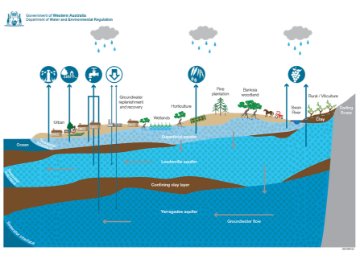
What's the difference between groundwater and scheme water?
- Groundwater: Water stored underground in natural spaces called aquifers. It comes from rain and water that seeps down through the ground. Groundwater is used for irrigation, gardens and drinking (after treatment).
- Scheme water: Water supplied through the mains network by the Water Corporation. It is sourced from groundwater, desalination plants and dams, then treated extensively to meet drinking water standards.
Caption: This illustration shows how rainfall recharges Perth’s groundwater system and how water moves through layered aquifers under our feet, wetlands, agricultural land and rivers before flowing toward the ocean.
The groundwater challenge
Many local governments across Perth face significant challenges managing groundwater. Storage in the Gnangara groundwater system is declining due to a drying climate, reduced rainfall and unsustainable abstraction - placing pressure on both the environment and the community's water needs. In addition, the State government have introduced cuts for Gnangara users of 10% by 2028.
For the City, groundwater usage accounts for 97% of total Council water use. This water is used to irrigate our parks, sports fields, street trees and public open spaces.
The challenge is to achieve our groundwater reduction targets while maintaining irrigated green spaces for community benefit.
How is the City achieving its groundwater reduction target?
As part of the State Government’s Gnangara groundwater allocation plan, the City is required to reduce groundwater use by 10% by 2028. To achieve this target the City has adopted the following strategies.
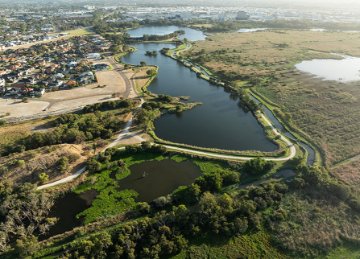
The City has four stormwater harvesting projects planned to supply irrigation to around 15 to 20 parks. This should achieve 45% of our groundwater target, recover a resource that is currently being wasted, and secure water for our parks in a drying climate.
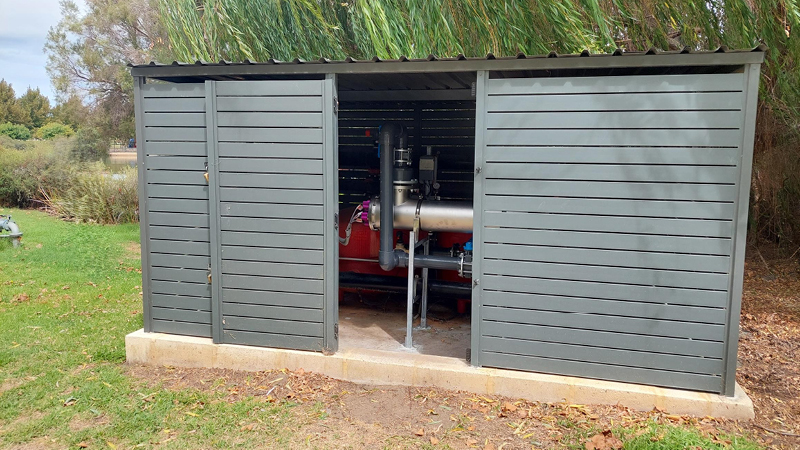
Stormwater can be pumped out of main drains, filtered and treated to remove any contaminants, and then connected into park irrigation systems. This reduces our reliance on precious groundwater and helps us achieve our groundwater targets. Our projects are planned within the Herdsman Main Drain catchment and will supply passive (i.e. not sporting) parks.
The City uses a combination of methods such as efficient and smart irrigation systems, waterwise park designs, and turf hydro-zoning to ensure water isn’t wasted.
Turf hydro-zoning
Hydro-zoning of turf creates turf zones with different watering rates to ensure water is concentrated to the most important and well used areas of a park, while reducing water to low priority or underused areas.
The City has been implementing hydro-zoning for many years, however given our groundwater target for 2028, this strategy will be rolled out on a wider scale to ensure it is standardised across all parks.
Central Irrigation Management System
All irrigated City parks are connected to a Central Irrigation Management System. This enables remote, real-time monitoring and control. The system incorporates data from weather stations to ensure we only use the exact amount of water required, reducing water usage by up to 20-30% compared to manual systems.
Waterwise Park Design
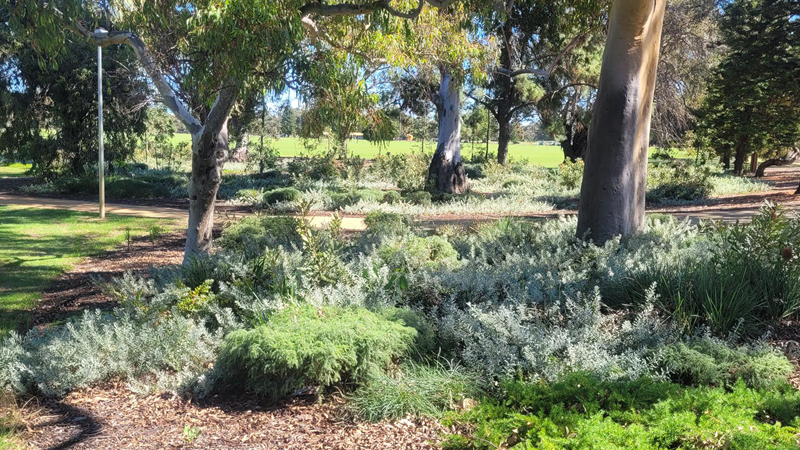
We know how much our residents value their local green spaces, and we do too. To make the smartest use of our limited water, when parks are being upgraded, elements of hydro-zoning and eco-zoning are being incorporated into the design.
Hydro-zoning - Involves grouping plants with similar water needs together to support more efficient and responsible irrigation. When designing and managing public open spaces, the differing water requirements of turf, lawns, trees and low water‑use plants are carefully considered.
Eco-zoning - The process of converting existing turfed areas into native garden spaces. These areas require significantly less water than traditional turf, resulting in substantial long‑term water savings.
These water‑smart design approaches help create resilient, attractive parks that are better suited to our climate, now and into the future.
This year nine parks have become water‑smart, including:
- Constance Nanson Reserve (Nollamara)
- Seabrook Wrigley Reserve (Dianella)
- Bradley Reserve (Doubleview)
- Heyshott Lancing Reserve (Balga)
- Howes Malba Reserve (Dianella)
- Waldorf Fairlane Reserve (Carine)
- Lennard Jeffery Reserve (Dianella)
- Williams Walney Reserve (Yokine)
- Wake Pola Reserve (Dianella).
How can you help?
Protecting our water is something we can all do together. Small steps like cutting down on water waste, using low phosphorus fertilisers, and making water smart choices in the garden all make a difference. There are also great waterwise discounts and gardening tips available for residents.
Waterwise discounts and incentives
A range of incentives and discounts are offered to assist residents, including:
- Waterwise Toilet Rebate
- Waterwise Irrigation Rebate
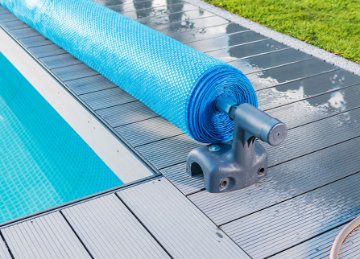
- Discounts on hot water, heat pumps and pool covers are also available through the City’s partnership with Switch Your Thinking.
Greywater systems fee relief
In addition, the City has waived greywater system application and permit fees, making it easier to install systems that reuse household wastewater for gardens. Greywater reuse can help meet the water requirements of gardens without placing additional demand on scheme water. It can also help keep gardens green when Perth water restrictions are in place.
How to install a greywater system
- Choose a greywater system approved by the Department of Health
- Submit an application to construct or install an apparatus for the treatment of sewage to the City ($118 application fee currently waived). Note, certain larger systems may require approval from both the City and also the Chief Health Officer of the Department of Health. These include, premises with more than 8 occupants, output of more than 540 litres of sewage per day, or a lot with multiple premises. This will require the payment of an additional fee ($118)
- Once approval is granted, ensure the system is installed by a plumber and they issue a Compliance Certificate
- Request an inspection by the City’s Environmental Health Officer by calling (08) 9205 8555 and present them with the Compliance Certificate
- Once the inspection is complete and the system approved, a “Permit to Use” the apparatus will be granted ($118 fees currently waived for this permit).
To learn more about greywater, visit gwig.org or download the West Australian Greywater Guide.
Waterwise gardening
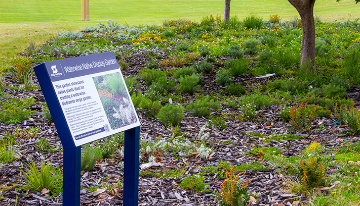
Did you know that more than 50% of household water is used in the garden? The City encourages all residents to be mindful of water use when planning and caring for their gardens. We offer a range of resources and programs to help residents create a beautiful, native waterwise garden:
- How to create a native verge garden
- Free Trees and Plants Program – In 2026, the City will provide more than 35,000 plants and trees to help green our neighbourhoods. Last year, more than 3,500 residents participated
- Native Plant Guide - A comprehensive guide to Australian natives suited to WA conditions. Includes tips on attracting pollinators, birds, and insects, plus garden design ideas and reference materials
- Fertilise Wise Campaign - Lawn and garden fertilisers are one of the largest threats to our rivers as nutrients added to our sandy soils are easily leached. Learn tips on this topic from SERCUL, a Perth community environmental organisation.
Tips to save water at home
The Water Corporation provides comprehensive advice on how to save water at home, including these top 10 tips:
- Water your garden early and only on your designated watering days
- Use mulch and wetting agents to reduce evaporation by up to 20%
- Cover your pool when not in use to prevent losing around 250 litres a day
- Take shorter showers (4 minutes or less) to save about 43 litres daily
- Fix leaking taps and toilets to stop thousands of litres of water being wasted
- Run your dishwasher and washing machine only with full loads
- Choose water-efficient appliances (look for WELS ratings)
- Collect cold water while waiting for it to heat and reuse in the garden
- Check for hidden leaks regularly - this can save up to 20,000 litres a year
- Be mindful of water use every day - small changes make a big difference.
For more information, visit the Water Corporation website.


