Future Stirling
Reviewing the Strategic Community Plan to guide the City’s long‑term direction.


The local community describes Mirrabooka as diverse, home and accessible to services. To better understand what is means to be ‘a local’ our suburb profile seeks to understand the local stories Koora (past), Yeyi (present), Boordawan (future) and respond to Ngalang Maya (our place). This snapshot identifies the unique character of Mirrabooka’s neighbourhood and helps the City rethink how we deliver services with a local focus.
Mirrabooka takes its name from the Aboriginal name for the constellation known as the Southern Cross.
Mirrabooka, which takes its name from the Aboriginal name for the constellation known as the Southern Cross, was planned in the 1960s as a satellite city to accommodate the rapidly increasing post-war population.
The area was envisaged to contain over 16,000 dwellings, in addition to commercial and recreational facilities. It was imagined that workers from Perth and the northern industrial areas would be attracted to the development. In the following decades the concept was revised several times, resulting in changes to suburb boundaries and various residential developments.
By 1982, the proposal for a complete satellite city was abandoned and the suburb of Mirrabooka was formally created from an area previously known as Yirrigan.
On Friday 15 March 2019, Mirrabooka Town Square was the home of a successful Guinness World Record for most nationalities in a drum circle, kicking off the City's Harmony Week celebrations.
A total of 77 nationalities were represented in the drum circle, smashing the previous record of 61 nationalities held by a Canadian not-for-profit group.
These are the top local priorities you've told us are important for Mirrabooka.
“Better security for residents - please help to address the anti-social behaviour.”
The City operates 19 Ranger Service vehicles between 7.00am and 7.00pm, Monday to Sunday. Over the past year, the number of Rangers has increased by nearly six. Patrol locations and equipment deployment are guided by data rather than a blanket approach, ensuring resources are focused on areas of greatest need. The City also offers a Safer Suburbs rebate, which supports residents to install CCTV and other security-related equipment to help secure their property and discourage break-ins.
To make a report, call the City's Community Patrol on 1300 365 356 (24/7 services) or report online.
Learn more about community safety initiatives in the City.
“More signage in parks for people to pick up after their dogs.”
The City will review existing regulatory signage in priority locations to ensure an adequate number of signs are in place, supported by targeted enforcement from Rangers. Patrols and equipment deployment are guided by data rather than a blanket approach, ensuring resources are focused on areas of greatest need.
To make a report, call the City's Community Patrol on 1300 365 356 (24/7 services) or report online.
Learn more about community safety initiatives in the City.
“Better housing.”
Recently announced changes planned to the State's Residential Design Codes seek to facilitate a mix of dwelling types, encouraging housing diversity and affordability in the housing market. This aligns with a key aim of the City's draft Local Planning Scheme No. 4 (LPS4) to "encourage a diversity of housing, including affordable and accessible housing, to cater for diverse and changing housing needs. " Draft LPS4 is currently with the Department of Planning, Lands and Heritage awaiting final determination.
Learn more about Draft Local Planning Scheme No. 4.
“Plant more native species, encourage homeowners to get solar panels.”
“Cleanliness in roadsides and should grow more trees to increase greenery.”
Through the 2026/27 plan and budget, the City will run community workshops encouraging residents to electrify their homes and install solar. Residents can also get discounts on solar through the Energy Incentives program.
Learn more on the Living Green Program webpage, or sign up for the Living Green newsletter for more updates.
Mirrabooka is largely characterised by single detached dwellings on small to medium sized lots. The average block size is 600 m², though lots of up to 890 m² can be found.
Much of the area has been developed, however there are still a small number of vacant lots remaining in the eastern sector of the suburb.
Houses are predominantly of brick and tile construction and are generally single storey.
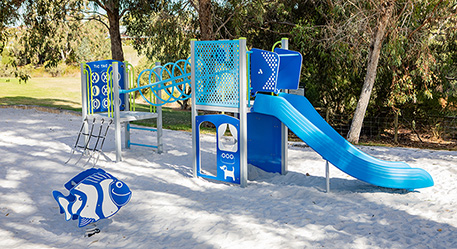
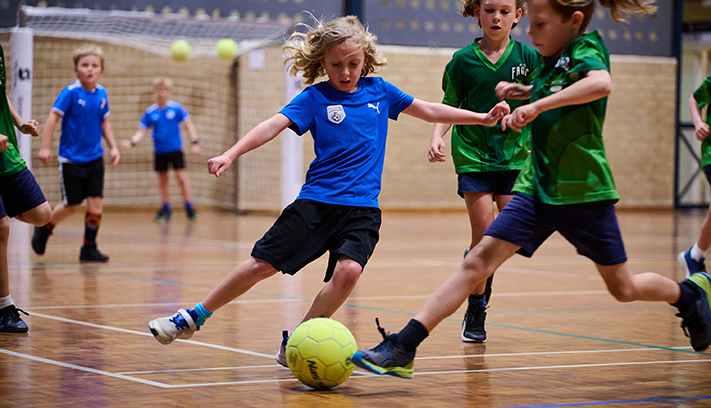
Mirrabooka is well-provided with 22 local open spaces, one community open space and three district open spaces. Recreational facilities include the Stirling Leisure - Mirrabooka.
The Mirrabooka Regional Centre, including Mirrabooka Square Shopping Centre, provides the region with a wide range of goods and services and also offers a significant number of employment opportunities.
The suburb also contains a smaller local shopping centre, called Mirrabooka Village, to supplement the larger retail core.
Three primary schools, one high school and a public library are located in Mirrabooka to serve education requirements.
Beach Alexander Bushland is a local natural area and Mirrabooka Bushland is a regionally significant natural bush forever area.
 News
News Local events


City of Stirling kaadatj Nyoongar moort Nyoongar boodja-k Wadjak boodja-k. Ngalak kaadatj Nyoongar nedingar wer birdiya koora koora wer yeyi. Baalabang koondarm, malayin wer nakolak baalap yang ngalany-al. Ngalak dandjoo barn wer kaaratj bandang boodja-k.
The City of Stirling acknowledges the traditional custodians of this land, the Wadjak people of the Nyoongar Nation, and pays respect to the Elders both past and present for they hold the memories, the traditions, the culture and hopes of Aboriginal Australia.