
_1920x474_jpg_1458_360.webp)
Whether you are starting a new business, relocating, expanding or changing what an existing premise is used for, this page sets out which approvals apply and what a typical business approvals journey looks like.
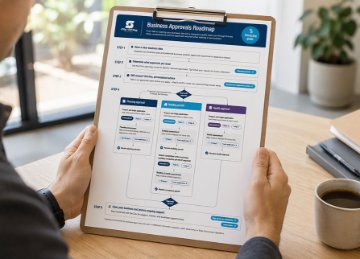
Your step-by-step guide to understanding approvals
The City's interactive Business Approvals Roadmap maps out every stage of the approvals process, so you know what to expect and when – from first idea to opening day.
1. Determine the approvals you need
What you need depends on your business type, your activities and your location. Use one of the options below to determine only what applies to you.
Answer a few short questions about your address and what you plan to do. The planning wizard tells you which approvals are likely to apply and gathers the right forms and information for you.
- Search by address, business type or zone
- Answer a couple of questions regarding your business or project
- Get a tailored list of forms to lodge, with links to learn more about each
- Email the results page to yourself at the click of a button.
A general guide to which City of Stirling approvals typically apply to common business types. This is a starting point only and not a determination. Confirm your exact requirements with the planning wizard or free pre-lodgement advice before you apply.
Key
✓ Usually needed
◐ Sometimes – depends on scale, site and works
— Not usually
| Business type | Planning approval | Building permit | Health approval | Operating permits | State and other* |
|---|---|---|---|---|---|
| ⌂ Home-based business | |||||
| Home office – Level 1 (no clients, signage, staff or food) | — | — | — | — | ◐ |
| Home occupation – Level 2 (small scale, ≤20m²) | — | — | ◐ | — | ◐ |
| Home business – Level 3 (higher activity/customers) | ✓ | ◐ | ◐ | — | ◐ |
| ▦ Office, professional and medical | |||||
| Office/consulting/professional services | ✓ | ◐ | ◐ | — | ◐ |
| Medical and allied health (consulting rooms) | ✓ | ◐ | — | — | ✓ |
| ▤ Shops and retail | |||||
| Retail shop/showroom | ✓ | ✓ | ◐ | ◐ | — |
| Liquor store/bottle shop | ✓ | ✓ | ✓ | ◐ | ✓ |
| 🍽 Food, beverage and hospitality | |||||
| Café/restaurant/takeaway | ✓ | ✓ | ✓ | ◐ | ◐ |
| Bar/pub/small bar (licensed) | ✓ | ✓ | ✓ | ◐ | ✓ |
| Mobile food van/market stall | ◐ | — | ✓ | ◐ | — |
| ✂ Personal care and beauty | |||||
| Hairdressing/barber and lash treatments | ✓ | ✓ | — | ◐ | — |
| Skin penetration services (tattoo, piercing, waxing) | ✓ | ✓ | ✓ | ◐ | — |
| ⚙ Trades, industry and automotive | |||||
| Warehouse/workshop/light industry | ✓ | ✓ | — | ◐ | ◐ |
| Vehicle sales/wash/service | ✓ | ✓ | — | ◐ | ◐ |
| ⌂ Accommodation and public venues | |||||
| Short-stay/holiday home/B&B | ✓ | ◐ | — | ◐ | ✓ |
| Lodging house | ✓ | ✓ | ✓ | ◐ | ◐ |
| Public building/venue (place of assembly) | ✓ | ✓ | ✓ | ◐ | ◐ |
*State and other examples include a liquor licence (DLGSC), short-term rental accommodation register, childcare licensing, AHPRA registration and your ABN and business-name registration.
Talk to our approvals team before you apply. They’ll confirm what you need and flag any issues early, so you get it right the first time.
Also use the Small Business Development Corporation (SBDC)'s Business Licence Finder to check whether any State or Commonwealth Government Licences and permits apply to your business type or activities, separate from anything the City processes.
2. Understand and apply for each approval
City approvals fall into four types. Pick the one that applies to you to see what it is, when it’s needed, the indicative time and fee and how to lodge and track it.
What it is
Also known as development approval, ensures that your proposed business activity is suitable for the location and complies with local planning requirements.
When it’s needed
- New buildings or major renovations
- Change of land use (e.g. office to shop)
- External signage and minor works
- Alfresco dining areas
- Home businesses and B&Bs.
Why is it needed
To support safe and appropriate land use and minimise impacts on the surrounding community.
More information
| Indicative time to hear back* | 60-90 working days |
|---|---|
| Fees | View fees |
| Team | Planning |
Learn moreLodge and track an application
* Indicative timeframes are when you can expect to hear back – not when approval is granted. They depend on whether the City needs to request more information, advertise your plans or refer to State Government regulators.
What it is
Confirms construction or fit-out work meets current building standards and is safe and fit for use.
When it’s needed
- Construction of new buildings
- Alterations to buildings
- Commercial fit-outs
- Structures like patios or pergolas.
Why is it needed
To make sure the premises are safe to occupy and compliant before you open.
More information
| Indicative time to hear back* | 10 working days |
|---|---|
| Fees | View fees |
| Team | Building |
Learn more Lodge and track an application
* Indicative timeframes are when you can expect to hear back – not when approval is granted. They depend on whether the City needs to request more information, advertise your plans or refer to State Government regulators.
What it is
Health approval and/or registration of businesses providing services that may impact the public health of the community.
When it’s needed
- Food and drink businesses
- Markets, mobile food vendors and events
- Beauty, cosmetic and skin penetration services
- Public buildings and accommodation premises
- Childcare, aged care and other care services.
Why is it needed
To support businesses effectively manage public health risks and comply with hygiene, safety and fit-out requirements, prior to opening to the public.
More information
| Indicative time to hear back* | 14 working days |
|---|---|
| Fees | View fees |
| Team | Environmental Health |
Learn more Lodge and track an application
* Indicative timeframes are when you can expect to hear back – not when approval is granted. They depend on whether the City needs to request more information, advertise your plans or refer to State Government regulators.
What it is
Permits to legally trade within public areas or to undertake certain types of commercial activity in accordance with the City's Thoroughfares and Public Places Local Law 2009.
When it’s needed
- Mobile food vending and market/street stalls
- Footpath trading – alfresco tables and outdoor dining
- Temporary structures and verge use for building works
- Filming and photography in public places
- Personal training in reserves.
Why is it needed
These permits help ensure your operations are safe, accessible and compliant with local laws.
More information
In addition to local government permits, certain activities may also require approvals from state or national authorities, such as liquor licensing or other specialised regulatory approvals. You can use SBDC’s Business Licence Finder to discover operating permits that may be required.
Business types: what to consider
Different types of businesses may have specific considerations based on the activities they carry out, the premises they use, or the services they provide. The examples below offer general guidance to help you understand how the approval categories above may relate to your business. For personalised advice, use the tools at the top of this page or explore the approval categories in more detail.
Home offices
Home offices are not permitted to employ anyone who is not a member of the household and is not permitted to have any custom/trade signage or involve any food preparation.
Home occupations
Home occupations are permitted to have some custom/trade signage. However, they are limited to the use of 20m2 of floor area and may not employ anyone who is not a member of the household.
Home businesses
Home businesses are permitted to employ up to 2 people who are not members of the household and are limited to the use of 50m2 of floor area. Some custom/trade signage is permitted.
For more information on home offices, home occupations and home businesses, please read the Home Office, Home Occupation and the Home Business Information Sheet for guidance on any required approvals.
Home food businesses
We suggest you read our Guidelines for Food Preparation in Residential Premises for Sale to the Public then visit the health approvals page for your next steps. Please contact the City for guidance on any required approvals. Once you have the necessary approval, you must complete and submit a Food Premises Notification Form.
Food, beverage and hospitality businesses are vital to the community by increasing tourism and boosting the economy. After you get all the necessary approvals from the City's Planning and Building approvals and other organisations (like Water Corporation for trade waste), please visit the health approval page for your next steps. This page will tell you about the rules, training, and approvals you need before opening.
Outdoor dining areas
The City recognises that outdoor eating areas (alfresco dining) can make a significant contribution to the vitality and ambience of public places. They offer opportunities for social interaction or quiet reflection while helping to stimulate the local business economy.
Businesses can apply for a Footpath Activation Permit and if the activation area is in accordance with the policy, the City will issue the business with an activation permit which is valid for the life of the use of the activation area.
A permit is not required to place one 'A' Frame sign on the footpath to support your business.
Temporary food vans/stalls/stands
A Permit to Provide Food at Events allows registered food businesses and not-for-profit organisations to trade at City of Stirling run/approved events. This permit is valid for one specified financial year and can be renewed each year.
We suggest you read our guidelines Minimum Standards for the Use of Temporary Food Premises for One or Two Day Events, ensure your public liability insurance is up-to-date and visit the health approvals page for your next steps.
Food, beverage and hospitality businesses are vital to the community by increasing tourism and boosting the economy. After you get all the necessary approvals from the City's Planning and Building approvals, please visit the health approval page for your next steps. This page will tell you about the rules, training, and approvals you need before opening.
All businesses in the food handling and preparation industry must apply for a trade waste permit before discharging any waste into the wastewater system (in accordance with the Water Services Act 2012). Please visit the Water Corporation's Trade Waste website, or contact the Trade Waste team direct on 13 13 95 or tradewaste@watercorporation.com.au.
If you run a buisness that offers personal care services like beauty therapy, waxing, tattoos, manicures, pedicures, or piercings, you need to follow specific health requirements. These requirements cover how your place is designed, how clean it is, and how you control infections.
First, check if you need Planning and Building approvals for your business location and set up. For more details on legislative and notification requirements, visit the health approvals page.
For more information, please phone our Customer Contact Centre.
The City has developed new, personal and group training guidelines. This is to help manage increasing requests for access to public open space and sporting grounds, by personal and group trainers.
To be eligible for a personal trainer or group fitness operator permit within the City of Stirling, you must have the following:
- Approved qualifications endorsed by Fitness Australia and/or VETAB providers such as TAFE, universities and nationally recognised training institutions/colleges
- A current senior first aid certificate
- Proof of current professional registration with Fitness Australia or the relevant peak body
- Current public liability insurance ($10 million minimum) and professional indemnity insurance for the life of the permit.
Personal training permits
| Permit types | Group size | No. of reserves per permit | Maximum hours per week |
|---|---|---|---|
| Small group | 1 - 4 people | 1 | 18 hours |
| Medium group | 5 - 10 people | 2 | 18 hours |
| Large group | 11 - 25 people | 3 | 18 hours |
Personal training seasonal permit fees
| Permit fees | Winter (1 April - 30 September) | Summer (1 October to March) | 12 months |
|---|---|---|---|
| Small group (1 - 4 people) | $225.00 | $425.00 | $550.00 |
| Medium group (5 - 10 people) | $550.00 | $750.00 | $1,100.00 |
| Large group (11 - 25 people) | $1,100.00 | $1,300.00 | $2,200.00 |
Bootcamps and short fitness session fees
| Group type | Cost per session |
|---|---|
| Small group | $5.00 per session |
| Medium group | $10.00 per session |
| Large group | $20.00 per session |
Personal training application process
- Step 1 - Read the Personal Training and Commercial Group Fitness Guidelines
- Step 2 - Read the Personal Training Policy
- Step 3 - Read the Frequently Asked Questions
- Step 4 - Submit an enquiry via the Reserves or beach booking form
- Step 5 - Your form will go to the Recreation and Leisure Services department for processing.
You'll be advised of the outcome of your application within five working days.

Still unsure? Get in touch
The City offers a pre-lodgement advice service to help you discuss your plans and receive tailored guidance before lodging an application. Identifying potential issues early can help streamline the approval process and save time and costs.
Frequently asked questions
Planning approval usually comes first, as it confirms your activity is allowed on the site. Once granted, you can apply for a building permit (for any construction or fit-out) and, where relevant, a health approval. Operating permits can usually be applied for when your activity is ready to start.
No.You need the relevant approvals in place before you begin trading or doing fit-out work. Operating without them can lead to delays, extra costs or enforcement action – so if you’re unsure what applies, get free pre-lodgement advice before you commit to a site or lease.
Fees differ by approval type – planning fees are based on the development value, building fees on the value of works, plus levies and health fees on your business type.
The time it takes to receive approval will depend on your proposal and the information provided, but typical assessment timeframes are:
- Planning: 60 - 90 working days
- Building: 10 working days
- Health: 14 working days.
The quickest path to opening is to submit a complete application from the outset. Our planning wizard or pre-lodgement advice can help you understand requirements and avoid common delays.


