Future Stirling
Reviewing the Strategic Community Plan to guide the City’s long‑term direction.


The local community describes Balga as high urban density, multicultural and friendly community. To better understand what is means to be ‘a local’ our suburb profile seeks to understand the local stories Koora (past), Yeyi (present), Boordawan (future) and respond to Ngalang Maya (our place). This snapshot identifies the unique character of Balga’s neighbourhood and helps the City rethink how we deliver services with a local focus.
Balga, from the Aboriginal word for an indigenous tree, was originally used for market gardens and poultry farms, before large-scale development of Balga began in the late 1950s.
Adopted in 1954, the name Balga is derived from the Aboriginal word for the indigenous grass tree Xanthorrhoea.
The Balga locality was originally part of a grant given to T. R. C. Walters in 1840 and was used primarily for market gardens and poultry farms, before large-scale development of Balga began in the late 1950s.
In 1950, the State Housing Commission resumed land at Balga to form part of the Mirrabooka satellite city, which was to also include Nollamara, Westminster and the northern portion of Dianella.
Mirrabooka was to become a regional centre containing 16,000 houses, as well as civic and recreational facilities including childcare, schools and public open space, and it was envisaged the Balga population of workers would commute to and from Mirrabooka and the northern industrial areas. Although the Mirrabooka project was never completed, the State Housing Commission gradually developed land at Balga.
These are the top local priorities you've told us are important for Balga.
"Make security better by having more preventative measures in place to discourage crime."
"Increased security patrols."
The City currently operates 19 Ranger Service vehicles between 7.00am and 7.00pm, Monday to Sunday, with four Community Patrol vehicles operating 24/7, 365 days a year. Patrol locations and equipment deployment are guided by data, rather than a blanket approach, ensuring resources are focused on areas of greatest need. This includes the ability to increase the number of Community Patrol vehicles to up to seven during priority times. The City also offers a Safer Suburbs rebate, which supports residents to install CCTV and other security-related equipment to help secure their property and discourage break-ins.
To make a report, call the City's Community Patrol on 1300 365 356 (24/7 services) or report online.
Learn more about community safety initiatives in the City of Stirling.
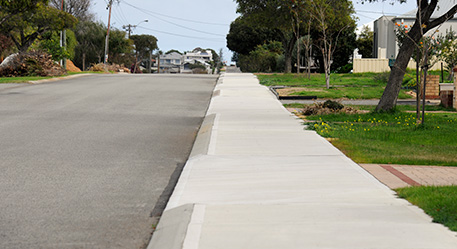
"Spend money on infrastructure/resources/shopping centres/roads/parks/etc."
The City has developed an Investment Attraction Framework which was noted by Council at its meeting on 10 June 2025. This will assist the City in better understanding where investment in infrastructure should be targeted and enable us to allow for it in our long term financial plan.
The City has commenced the preparation of a new Local Planning Strategy, which will set the planning directions and actions to address key challenges and opportunities for managing growth and change over the next 15 years. The Strategy will be structured around these four key themes:
View the City of Stirling Minutes and Agendas.
"More community events, food markets, stuff to do with kids. More social interaction to get people talking and feeling of togetherness."
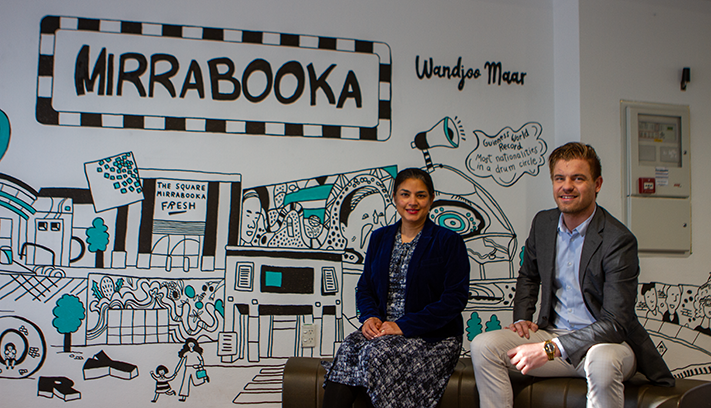
"Murals and street art in common or high traffic spaces."
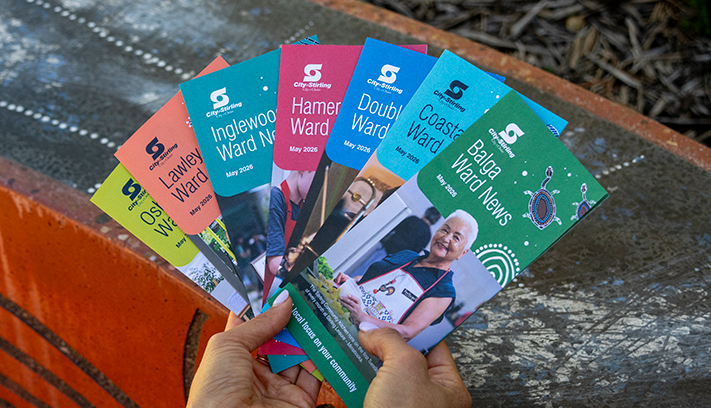
A key output of the City's Events and Sponsorhip service is to support the delivery of enjoyable, high-quality, inclusive and accessible event experiences for the community across the City, along with funding and support for local artists and events. Balga is fortunate to have event infrastructure in the Open Space and a skate park, which play host to a variety of events throughout the year including the annual Balga Skate Park Festival.The City’s Libraries also host a variety of programs, activities and groups for community members promoting social interaction and inclusion. To find out whats on locally the City's Events Calendar on the website is a great source of information on upcoming events, as is the City's Facebook page with a monthly 'What's On' listing, Stirling Scene e-newsletters, and Ward Brochures.
Learn more about the City's Events Calendar.
The City of Stirling’s Public Art Collection consists of over 82 permanent pieces, including sculptures, integrated artworks, murals, play-friendly artworks and functional artworks. The collection has a strong focus on works by Western Australian artists, with a mix of established and emerging creatives. The Public Art Collection features artworks that form an integral part of each place and community, enhancing the City’s thriving neighbourhoods and public amenities, providing a vehicle for the expression of local stories and identities, building community connection and contributing to economic development.
The City of Stirling acknowledges the importance of fostering a connected, strong and creative community, enhancing arts, culture and heritage across the City. Locally-led and Creative Communities grants are designed to stimulate cultural and creative programs across the local community and provide vibrant places for people to live, work and visit.
Learn more about Arts in our City.
"Have a better recycling and sustainability program."
The City of Stirling is actively exploring alternative waste treatment options to increase resource recovery and reduce reliance on landfill. As part of this work, we continue to monitor developments in strategic waste management, including the potential introduction of a Food Organics Garden Organics (FOGO) service in the future. Our commitment aligns with the Sustainable Stirling Strategic Community Plan, working towards becoming a waste-wise City that supports a low-waste, circular economy and protects our environment from the impacts of waste.
Supporting a Low-Waste Community We provide a range of programs and initiatives to help residents reduce waste and live more sustainably. These include:
Our workshops cover practical topics such as reuse, repair and waste avoidance, empowering residents with the skills and knowledge to make sustainable choices.
Community Grants for Sustainability Projects
We recognise that creating a sustainable future is a shared effort. Community groups, organisations and individuals all play an important role in protecting and enhancing our environment. Through the Community Grants Program, funding from under $2,000 to over $20,000 is available to support projects that strengthen communities and deliver meaningful local outcomes.
The Sustainable Communities funding stream supports the goals of Sustainable Stirling 2022–2032, including:
Learn more about waste and recycling in the City of Stirling.
"Dog park - lights and maintenance."
Lighting upgrades were completed at Princess Wallington Reserve, including the dog park, during the 2025/26 financial year.The project replaced the metal halide floodlights on the 3 x poles, with LED floodlighting to 6 x poles, that cover all 4 soccer fields on the Reserve to allow for night training and match play for community level football (all codes) in line with the relevant Australian Standards. Each floodlight pole also included a lower powered floodlight, which provides community reserve lighting that allows for recreation whilst the sport floodlighting is not in use.
To learn more about Community Infrastructure Projects visit the shaping our City page.
Balga streets began to be laid out in 1959 with the majority of housing constructed between 1964 and 1970 the area is largely characterised by single-storey residential dwellings with lot sizes averaging 700 m2.
Most dwellings in Balga are made of brick and tile, reflecting the period of development and, while most residences are detached, there are some examples of grouped dwellings and flats throughout the suburb.
Balga contains 26 local open spaces and six district open spaces made up of parks and recreational reserves. The largest is Princess Wallington Reserve. Offering a broad range of recreational facilities, including an aquatic centre, tennis courts, cricket club and soccer club, its central location provides an important focal point for the Balga community. Fletching Climping Reserve is also identified as a Local Significant Natural Area.
Numerous other small parks and reserves, such as Heritage Park and Celebration Park, can be found across the suburb.
Balga also contains two local shopping centres, both of which provide a range of retail services to fulfil local needs:
Several primary schools, as well as Balga Senior High School and the North Metropolitan TAFE, serve education requirements in Balga. Established in 1972, the Balga campus of TAFE provides a diverse range of part-time and full-time studies with courses ranging from business studies and hairdressing to carpentry and plumbing.
 News
News Local events


City of Stirling kaadatj Nyoongar moort Nyoongar boodja-k Wadjak boodja-k. Ngalak kaadatj Nyoongar nedingar wer birdiya koora koora wer yeyi. Baalabang koondarm, malayin wer nakolak baalap yang ngalany-al. Ngalak dandjoo barn wer kaaratj bandang boodja-k.
The City of Stirling acknowledges the traditional custodians of this land, the Wadjak people of the Nyoongar Nation, and pays respect to the Elders both past and present for they hold the memories, the traditions, the culture and hopes of Aboriginal Australia.