Dianella Centre - Precinct Structure Plan
Planning the transformation of the Dianella Centre site into a vibrant community hub.

The local community describes Dianella as accessible, growing and family friendly. To better understand what is means to be ‘a local’ our suburb profile seeks to understand the local stories Koora (past), Yeyi (present), Boordawan (future) and respond to Ngalang Maya (our place). This snapshot identifies the unique character of Dianella’s neighbourhood and helps the City rethink how we deliver services with a local focus.
Dianella is named after a small blue lily that used to be common in the area. Sandy soil hampered growth until the 1960s when housing construction first occurring north from Walter Road and Grand Promenade. Find out more about Dianella, including residential and community development.
Dianella got its name from a small blue lily, known botanically as dianella revolute, a narrow-leafed plant plentiful in the area before residential redevelopment.
The land that now forms Dianella was originally distributed to Robert Thomson, George Darby, James Drummond and James Birkett between 1829 and 1930, although early development was slow because the soil was deemed unsuitable for agriculture.
These are the top local priorities you've told us are important for Dianella.
"Improve Dianella Plaza and the surrounding vacant land."
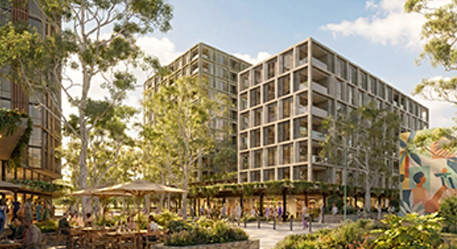
Council have endorsed the City's draft Local Planning Scheme No. 4. Once approved by the Minister for Planning, this document will facilitate upgrades to Dianella Plaza and redevelopment of vacant land.
Learn more about Draft Local Planning Scheme No. 4.
“More trees and turning verges into low water needs gardens.”
Through the 2025/26 plan and budget, 8,000 trees were planted in parks and verges, with over 650 planted throughout Dianella during the 2026 planting season.
Furthermore, the City has increased tree watering from 2 years to 3 years for new trees to mitigate loss. An additional 784,000 trees and shrubs will be planted across the City by 2040.
The plan and budget also includes funding to complete a strategic review of waterwise local park upgrades and implementation plan to maximise water savings by 2028.
Learn more on the Living Green Program webpage, or sign up for the Living Green newsletter for more updates.
“Personally I think the parks could do with better play equipment and some seating. Additional road sweeping too."
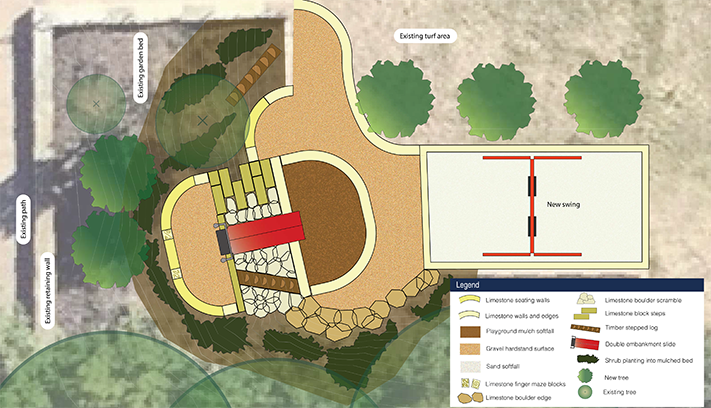
The 2026/27 budget includes the renewal of three playgrounds across Dianella including Gordon Phoenix Reserve, Gay Osborne Reserve and Des Hoffman Reserve receiving swing upgrades and Local Reserve Upgrade.
To learn more visit Playground Renewal Program.
“Making sure new home builds retain existing mature trees and new homes cover less than 50% of the block size.”
The City applies the Residential Design Codes which limit the amount of site coverage a property can have and, with recent reforms, seeks to encourage a diversity of housing types. The City is also committed to fast track assessments for properties seeking to retain a mature tree as part of their development application (DA). Following a successful trial resulting in the planting of almost 800 trees, the City has budgeted to retain the Tree Project Officer position in 2026-27 to ensure trees are retained and planted where required as part of a DA.
Learn more about trees and development in the City of Stirling.
“I really want verge collection back because I can't fit all of my stuff in the skip bin."
To provide more flexible and convenient options, the City offers a range of free on-demand waste services, allowing you to book collections at a time that suits your needs rather than waiting for a scheduled verge pickup.
Each household can access the following services each financial year:
The lounge suite collection service has been introduced in response to community feedback, providing a practical solution for large items that are difficult to fit into a skip bin.
Residents can choose to use their annual allocation for either a skip bin or a lounge collection, not both. Additional services can be purchased if needed. If you have more waste than can fit in your skip, you can also book additional skip bins at a discounted rate of $115 per skip, per financial year.
Additional Disposal Options
In addition to on-demand services, ratepayers can use their Tip Passes at the Recycling Centre Balcatta to dispose of excess materials:
The Recycling Centre Balcatta is open 7 days and also accepts household hazardous waste and a wide range of recyclable items free of charge. Our skip bin service is one of four free on-demand collection services offered by the City to all households.
Find out which items you can drop off on the recycling and hazardous waste webpage.
Learn more about waste and recycling in the City.
Much of Dianella was subdivided in the 1880s by the Intercolonial Investment Company of Sydney but the sandy soil continued to hamper growth. By 1919, the only development in Dianella was along Walter Road, which was then a track leading to dairy farms in the Morley area.
At this time, Dianella consisted of four localities known as North Inglewood, East Yokine, Morley Park and Bedford Park, which were amalgamated to form Dianella in 1958—and a growth boom occurred soon after. Early settlers such as Birkett, Drummond and Drake are honoured in Dianella's street names.
Dianella's development progressed rapidly during the boom years of the 1960s with housing construction first occurring north from Walter Road and Grand Promenade. St Andrews and Dress Circle Estates were the last major areas to be developed.
The character of housing varies considerably and ranges from modest post-war homes to large, modern 2-storey dwellings. Most houses are single-detached and of brick construction but there are a significant number of duplexes and villas, as well as some older flats in the southern part of Dianella.
Dianella has two community open space, 65 small parks and one large regional open space in the heart of the suburb provides a central focus for the community and is an important landmark, providing a significant landscape feature for the suburb.
Regionally Significant Natural Areas and bush forever areas include;
Located at the junction of Alexander and Morley Drives, Dianella Regional Open Space offers opportunities for many kinds of recreation and includes a community recreation centre, soccer field and tennis courts. The suburb's main shopping centre is Dianella Plaza, although several smaller stores also cater for local needs.
Education is provided by a number of primary schools and Dianella Secondary College, and the suburb also has a senior citizens centre and public library.
Dianella is also home to the three commercial television stations operating in Perth, and their studios and associated infrastructure have had a marked impact on the suburb.
 News
News Local events


City of Stirling kaadatj Nyoongar moort Nyoongar boodja-k Wadjak boodja-k. Ngalak kaadatj Nyoongar nedingar wer birdiya koora koora wer yeyi. Baalabang koondarm, malayin wer nakolak baalap yang ngalany-al. Ngalak dandjoo barn wer kaaratj bandang boodja-k.
The City of Stirling acknowledges the traditional custodians of this land, the Wadjak people of the Nyoongar Nation, and pays respect to the Elders both past and present for they hold the memories, the traditions, the culture and hopes of Aboriginal Australia.