

- Open date
08 July 2026
- Closing date
29 July 2026
Last update date: 26 August 2026
Public Health Plan 2026-2031
In July 2026, the City sought feedback on the draft Public Health Plan 2026-2031, which aims to support the health and wellbeing of our community through the services, initiatives and spaces we deliver.
Public health isn’t just about hospitals – it’s also shaped by everyday things close to home including the programs and places that the City provides. From parks and leisure centres to community events and safety initiatives, these all play a role in your wellbeing. That’s what this Plan is about.
Informed by community input and the latest health data, the finalised Plan focuses on key priority areas including healthy, active communities; mentally healthy and socially connected communities; and safe and resilient communities – with clear actions and measures to track how we’re doing.
The Plan was adopted by Council on 25 August 2026. You can view the Council Meeting minutes here.
Did you know?
Connected and shaded footpaths make it easier to build movement into daily life and support active travel, helping create healthy, active communities. That’s why the City maintains more than 900km of footpaths and continues to expand the network every year.
Nearly 400 City-facilitated events and a range of community arts opportunities each year bring people together to support mentally healthy and socially connected communities. In fact, cultural events and festivals were identified as the top priority for improving sense of belonging.
Safe and resilient communities matter to your health. That’s why the City helps people feel safe in their neighbourhoods by providing more than 800 clean, well-maintained parks and playgrounds, along with initiatives like home security rebates.
You can explore more initiatives that support health and wellbeing further down the page.
Plan priorities
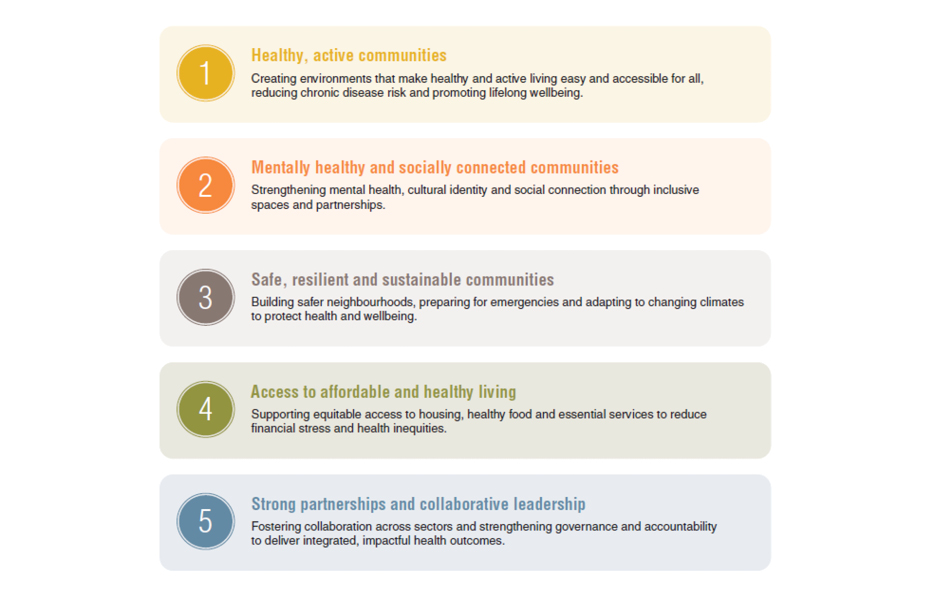
Shaped by community input – including Everyone Belongs and Future Stirling – and supported by health data, Plan identifies five priority areas. Below are just some examples of how these look in everyday life.
Staying active isn’t just about fitness – it can lower the risk of chronic disease, strengthen mental wellbeing and help people feel more connected.
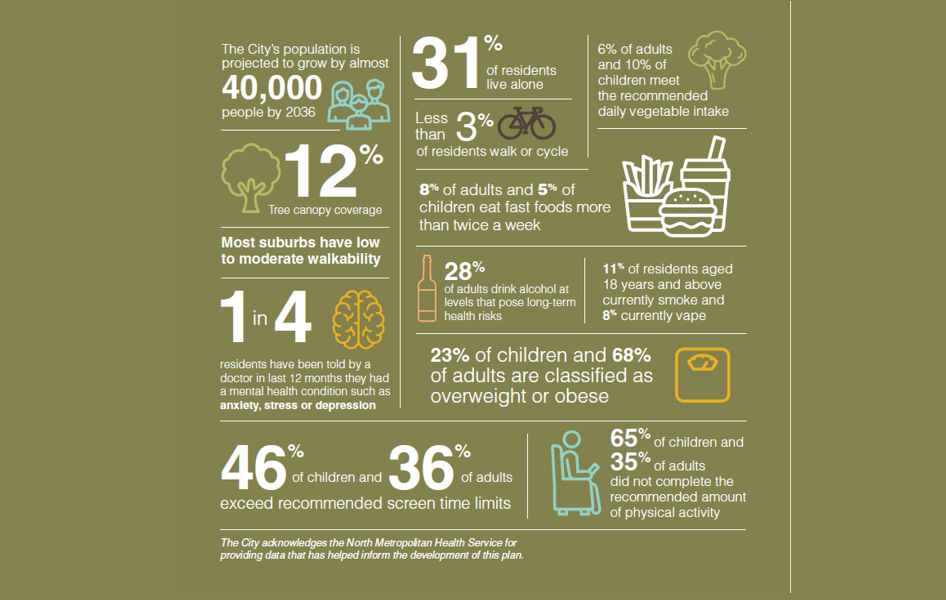
Around half of residents aged 18-34 and over 55 identified physical activity as their top priority, while data shows 35 per cent of adults and 65 per cent of children aren’t getting enough daily movement.
To support people to move, the City offers:
Choice and flexibility: More than 230 low-cost group fitness classes each week including seniors sessions and a teen gym program with trainer support
Places to move: Seven major shared paths and trails for walking, running and cycling including the Lake Gwelup Story Trail with combines culture with activity, and the Living Actively initiative that encourages everyday movement close to home
Greener neighbourhoods: Free tree and plant giveaways to help grow canopy cover to 18 per cent by 2040 – creating cooler, more walkable streets.
Feeling connected, valued and included within the community helps protect against stress, anxiety and depression.
In a diverse community like Stirling, needs vary across age groups and cultures – from young people to seniors, and new residents settling into the area.
Around one in four residents were diagnosed with a mental health condition in the past year, and almost half of 35-54-year-olds identified mental health as their top priority.
To support mentally healthy communities, the City provides:
- Connections to support: Linking residents to local mental health support services including programs and resources for migrants and newcomers and the City-led Naala Djookan Healing Centre for women affected by family and domestic violence
- Programs that bring people together: Stirling Senior Services (transport, meals, day clubs) and Youth Services (drop-ins, activities, events)
- Ways to give back: Volunteering opportunities – from community kitchens to mentoring to community gardens – helping people find purpose and connection.
Neighbourhoods that feel safe and resilient are essential for protecting public health, well-being, and quality of life.
While six in 10 residents feel safe in their community, access to safe, clean environments was among the top public health priorities, particularly since almost a third of residents live alone.
To support community safety, the City offers:
- 24/7 Community Patrols: Responding to disturbances like noisy parties, reporting suspicious and antisocial behaviour, and checking properties while residents are on holidays
- Graffiti removal: Removal from City infrastructure and providing free graffiti removal wipes to residents
- Living Safely initiative: Bringing together programs and partnerships that support community safety, from home security rebates to events that educate and empower residents.
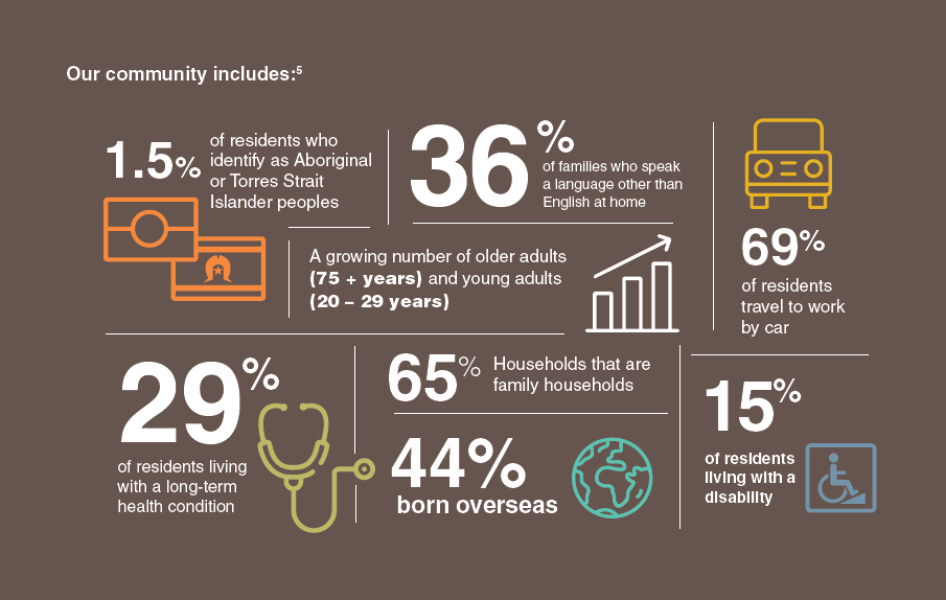
Stirling Snapshot
FAQs
A public health plan is a practical roadmap for how the City can support the health and wellbeing of the community. It identifies key health priorities and sets out actions to ensure they’re achieved.
Under Western Australia’s Public Health Act 2016, local governments are required to plan for and protect community health. This includes preparing a public health plan that aligns with the State Public Health Plan for WA 2025-2030 and responds to local needs.
In July 2026, the City sought community feedback on the draft Public Health Plan through submissions, a health challenge, and a variety of in-person engagement opportunities. Consultation has now closed, and we sincerely thank all participants for helping shape the Plan.


