How will I fit everything in?
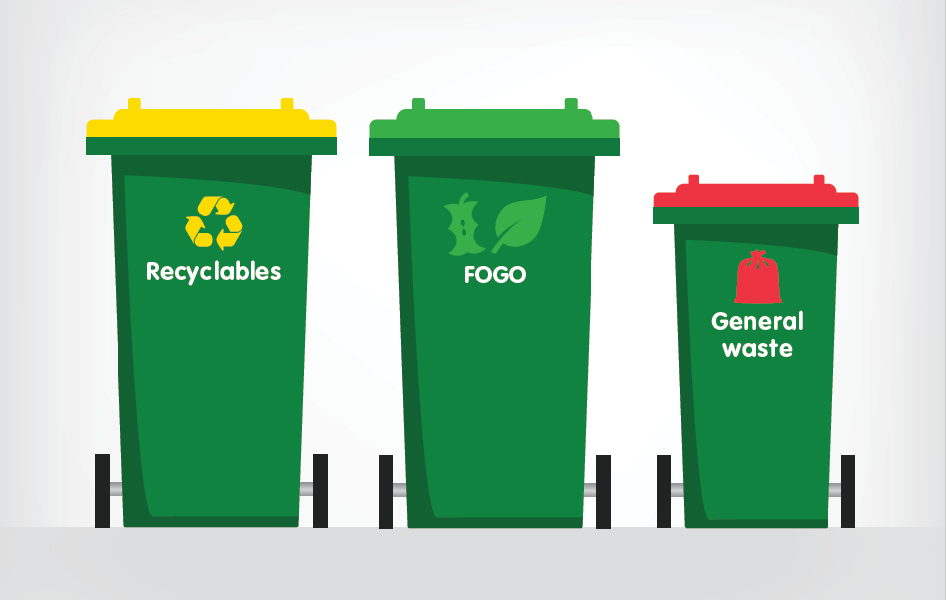
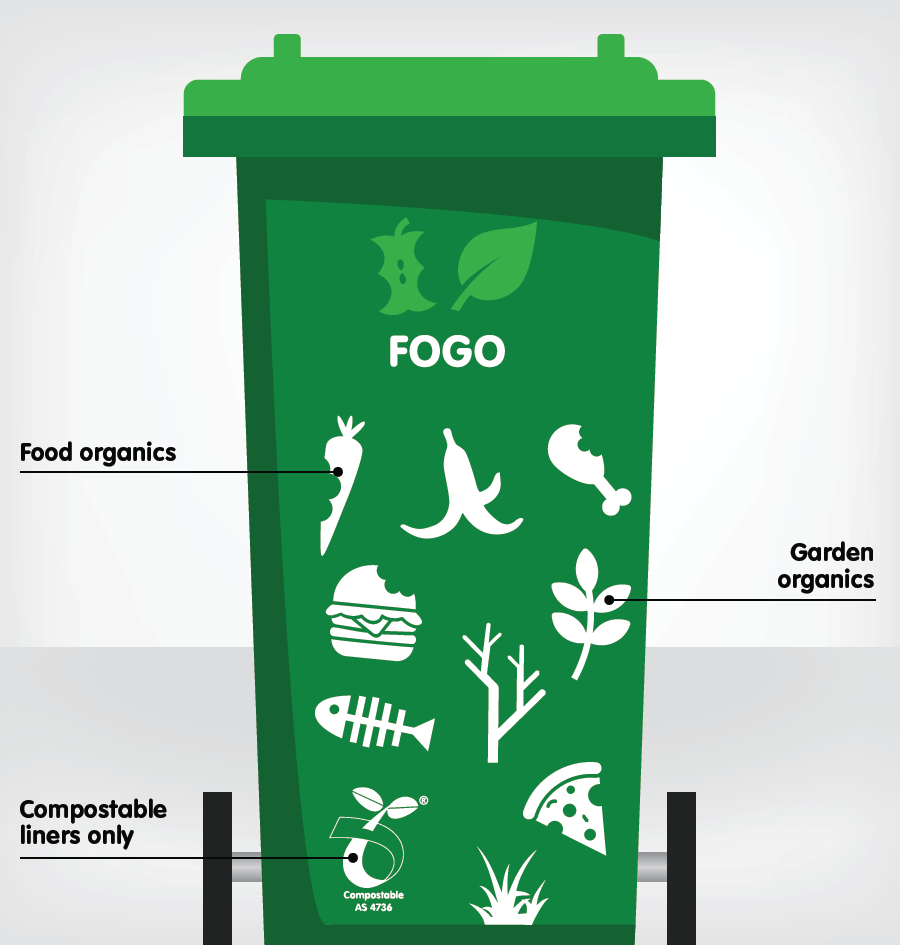
Most households find they can comfortably manage their waste once food and garden organics are separated into the lime green lid FOGO bin.
Waste audits in the City have shown that more than half of the material placed in red lid general waste bins is food and garden organics, with a further 25 per cent made up of recyclable items.
Sorting waste into the correct bins significantly reduces how much ends up in general waste.
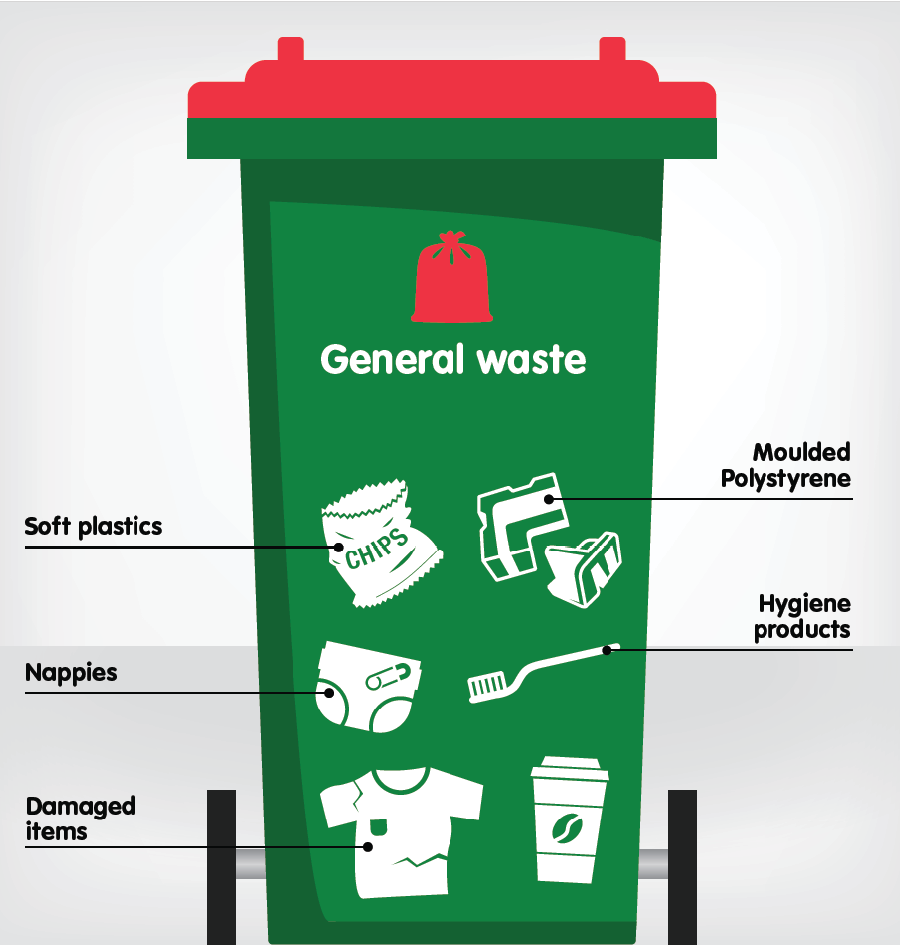
With food and garden organics removed, your red lid bin will mainly contain dry items such as non‑recyclable packaging, soft plastics, personal hygiene products, damaged clothing and small amounts of residual waste. This makes it much easier to manage general waste across a fortnightly collection.
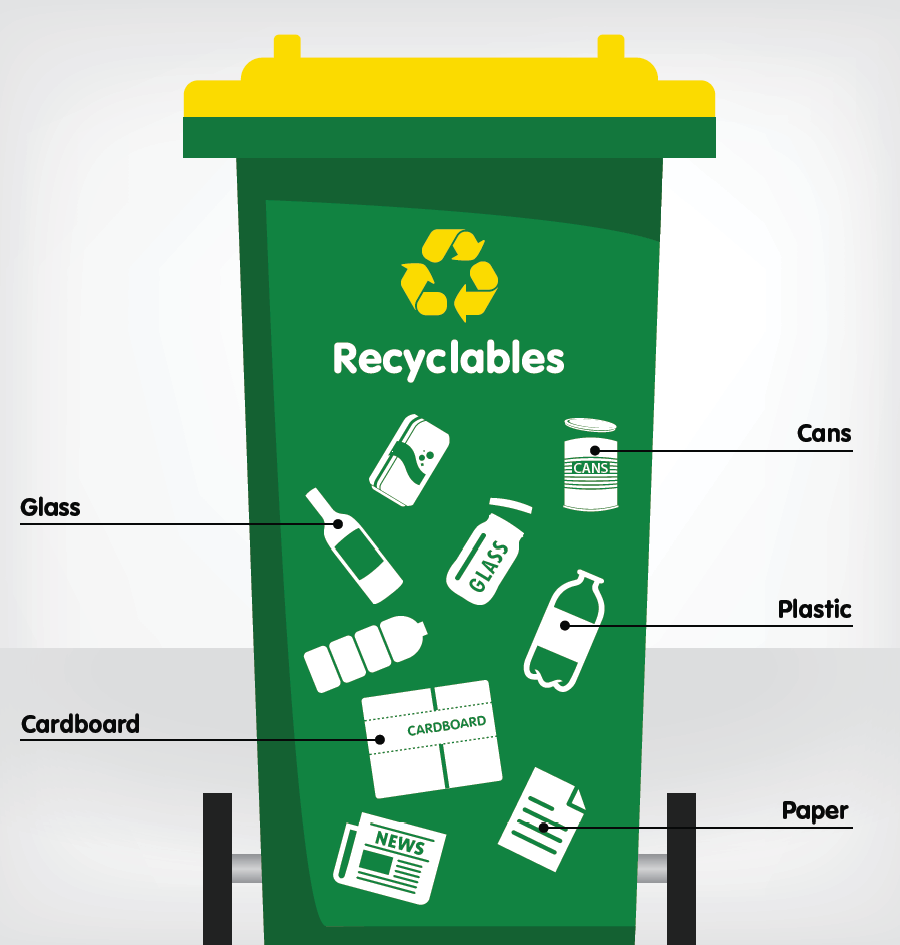
Yellow lid recycling bin upgrades from 240 litres to 360 litres are also available, if needed.
You can also use the Recycling Centre Balcatta, which is open seven days a week, to drop off excess cardboard and polystyrene packaging free of charge.
What if I need additional capacity?
We understand that some households may have specific needs. If you require extra bin capacity during the trial, our project team will work with you to find a suitable solution. This may include access to a larger red lid general waste bin if required.
Why isn’t the trial available for apartments and units?
Multi‑unit complexes often use shared bin systems, which require a different service approach. Some smaller properties also do not have a Garden Organics (GO) bin, which is required for a FOGO service. As this is a short‑term trial, units and apartments have been excluded so we can focus on testing the core FOGO service model.
If you live in a multi‑unit complex, your existing bin arrangements and collection schedules will continue as usual.
What’s my collection schedule?
For single‑dwelling homes, your collection day remains Thursday throughout the trial. The only change is how often each bin is collected:
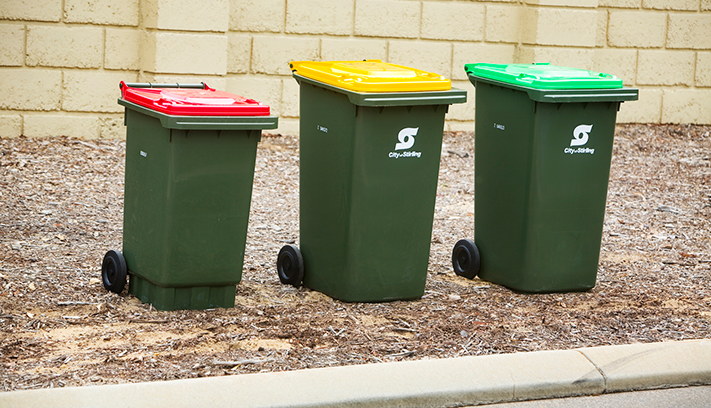
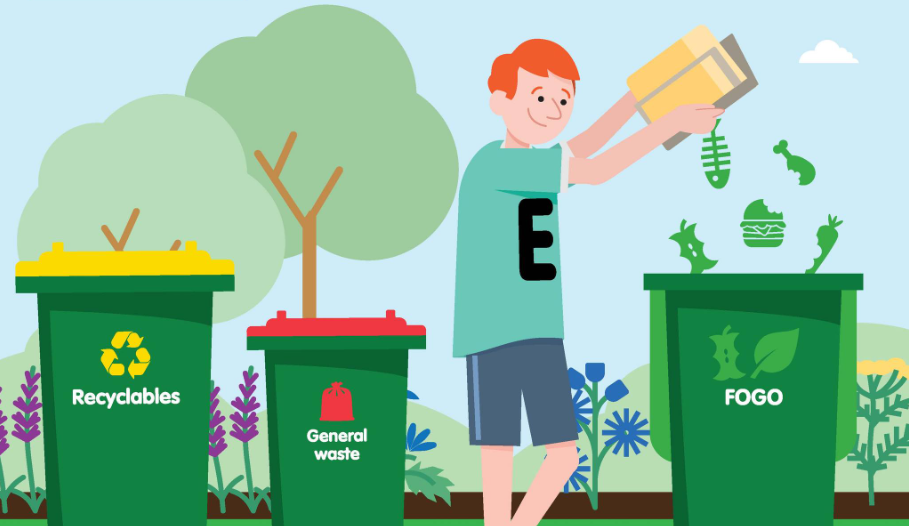
- Your lime green lid FOGO bin will be collected weekly
- Your red lid general waste bin and yellow lid recycling bin will be collected fortnightly on alternate weeks
This means you’ll present two bins each week:
- One week: FOGO + recycling
- The next week: FOGO + general waste
By now you should have received your kitchen caddy and compostable liners, as well as a FOGO Trial collection calendar to place on your fridge for easy reference.
For multi‑unit complexes, there are no changes. Your current bin arrangements and collection schedules continue as usual.
What if my bin is missed?
Bins are collected between 6am and 6pm. If your bin was out on time and it was missed, please report it within 48 hours so we can organise a return collection. You can report a missed service and other bin maintenance issues through the City’s website or by calling (08) 9205 8555.
Does the trial cost me anything?
No. There are no additional costs for residents taking part in Coolbinia’s 24‑week FOGO trial.
You should already have the required bins. If you are missing a bin or need a replacement, please contact us so this can be arranged. Your compact 7‑litre kitchen caddy and compostable liners have also been delivered to your home at no cost.
How can I prevent odours?
Your FOGO bin is used for food waste that can smell as it breaks down, such as meat scraps, seafood, bones, dairy and other food leftovers. To help manage odours, the FOGO bin is collected weekly.
To help minimise odours, keep your bin lids closed and store your bins in a shaded position if possible. If your bin starts to smell, giving it an occasional hose-out with a small amount of dish detergent can help keep odours under control.
Research shows that odours in FOGO and general waste bins typically peak after four days. After this period, the odour intensity generally does not get significantly better or worse.
What can I line my kitchen caddy with?
By now you should have received enough certified compostable liners to last the duration of the trial, and you can request more if needed. You can also choose to use your caddy with no liner at all – simply place food scraps directly into the caddy and rinse it out, or wash it in the dishwasher.
If you choose to purchase additional liners, please make sure they are certified compostable to AS 4736. Look for the seedling logo on the packaging. Liners labelled as biodegradable, oxo‑degradable, partially plant‑based, or made from recycled or ocean plastic are not accepted in the FOGO system. These products contain plastic and can contaminate the compost.
How do I use my kitchen caddy and compostable liners?
Your kitchen caddy is an important part of the FOGO system, helping you to separate food scraps from your general waste and recyclables right in your kitchen. Place your food scraps into the kitchen caddy, either loose or using a certified compostable liner. Every two to three days, or when the caddy is full, empty the contents (including the liner) into your lime green lid FOGO bin.
Compostable caddy liners are designed to start breaking down within a few days when exposed to moisture, so it’s important to change them regularly. To prevent spills or the liner splitting, carry the caddy to your bin and tip the contents in, rather than carrying a full liner on its own.
Store compostable liners in a cool, dry place away from direct sunlight. When stored correctly, they have a shelf life of around 12–18 months. Your kitchen caddy can be washed by hand or placed in the dishwasher for easy cleaning.
Is my kitchen caddy airtight?
The kitchen caddies are not airtight by design. Airtight containers make odours and liquids worse by trapping moisture and speeding up decomposition. To help reduce smells, we recommend keeping your caddy lid shut, emptying your caddy every 2–3 days, scraping excess liquid from food scraps where possible, and rinsing the caddy regularly with warm soapy water, or pop it into your dishwasher for a deep clean. Freezing meat, bones and dairy and putting them into your FOGO bin the day before collection day can also help minimise odours.
My kitchen caddy is damaged, how can I organise a replacement?
Contact the City on (08) 9205 8555 or the General Enquiry Form to arrange for a repair or replacement to be delivered.
Can I put compostable containers and plant-based plastics in my FOGO bin?
No. Even if plant‑based plastics (such as PLA) are labelled compostable or biodegradable, they are not accepted in the FOGO bin. Solid bioplastics and single-use foodware marked compostable – such as cutlery, coffee cups, takeaway drink cups and containers – take much longer to break down than the FOGO composting process allows. These items should be placed in your red lid general waste bin. Wherever possible, we encourage choosing reusable alternatives, such as a keep cup or reusable cutlery set.
Which bin for dirty or food-soiled paper, paper towel or tissues?
Used or soiled paper products (including paper towels and tissues) should be placed in your red lid general waste bin. The FOGO bin is for your food scraps and garden organic waste. The composting process requires a careful balance of 'green' nitrogen rich materials, such as food scraps, fresh grass clippings and leaves, and 'brown' carbon rich materials, such as dry leaves, twigs, small branches. In order to maintain this balance and create a high quality compost product, soiled paper products are not priority FOGO-feedstock materials. As always, any clean paper or cardboard can be placed in your yellow lid recycling bin.
What about tea?
Teabags are unsuitable for FOGO as they may contain plastic within the bag. Loose tea leaves or coffee grounds are good to FOGO.
What about mouldy or out-of-date food?
Mouldy or expired food can go in your FOGO bin. It's already starting breaking down, which supports the composting process. Just remember to put any packaging in the red lid general waste bin.
Which bin for pet waste?
All pet waste - including dog waste, pet waste bags, and all types of kitty litter (both soiled and unsoiled, including paper-based) - should go in your red lid general waste bin. This is because products labelled 'biodegradable' are not always compostable. Many items marked as '50/60% plant based', 'recycled content', or 'upcycled ocean plastic' still contain plastics that will break down into microplastics and contaminate the compost produced through FOGO. Only bags certified to Australian composting standards should be placed in your FOGO bin. Look for the AS4736 seedling logo, which confirms the product is fully compostable.
What if I already compost / worm farm at home?
If you already compost or have a worm farm at home, we encourage you to continue. Home composting and worm farming are the best outcomes, turning your organic waste into nutrient‑rich compost you can use in your garden. The FOGO service works alongside home composting and worm farming by providing a way to dispose of items that you may not want to put into household systems, such as meat, bones, seafood, dairy, cooked foods and excess garden waste. If you use a bokashi system, you can also place the finished fermented bokashi waste into your FOGO bin.
How are the FOGO bin contents getting processed?
The contents of your lime green lid FOGO bin are taken to our contractor’s transfer station, where they are loaded into bulk containers and transported to a licensed commercial composting facility. At the facility, FOGO material is composted for around 18-20 weeks using a modern, enclosed composting system that carefully controls air and moisture. The material is laid over special pipes, and air is gently blown through it to keep the compost healthy and odour‑controlled. Larger pieces are then screened out and sorted. The mature compost is used in landscaping and agriculture, where they help improve soil health, reduce water loss, and add valuable nutrients. It can also be mixed with other soil amendments to become a bagged soil improver or potting mix product.
What if I have a larger red lid general waste bin?
If your household currently has a larger red‑lid bin, you can continue using it during the trial. The only change is that it's collected fortnightly. If you need help sorting your waste or have any questions, please contact the City for assistance.
Can I opt out of the trial?
No. Collection rounds are adjusted to support the FOGO trial in Coolbinia, so all households need to follow the new collection schedule.
All single‑dwelling homes in Coolbinia are included in the 24‑week trial so we can collect consistent feedback on what works well, what doesn’t, what feels easy, and any challenges residents experience.
During the trial, the red lid general waste bin moves to a fortnightly collection. Choosing not to use the FOGO system would mean food scraps remain in a bin that is not emptied weekly. Using the weekly FOGO collection helps keep your general waste bin fresher and easier to manage.
Our team is available to support you throughout the trial and help answer any questions along the way.
Where can I get more information and keep up to date?
You can stay up to date by visiting this webpage or joining the City’s Coolbinia FOGO Trial Facebook Group. The group is a great place to connect with your community, ask questions, and receive updates throughout the trial. If you’d prefer to get in touch directly, you can call us on (08) 9205 8555 or submit an enquiry via the General Enquiry Form – whatever suits you best.

 Latest news