11 August 2026
Fishing restrictions to protect wildlife at local lakes and wetlands
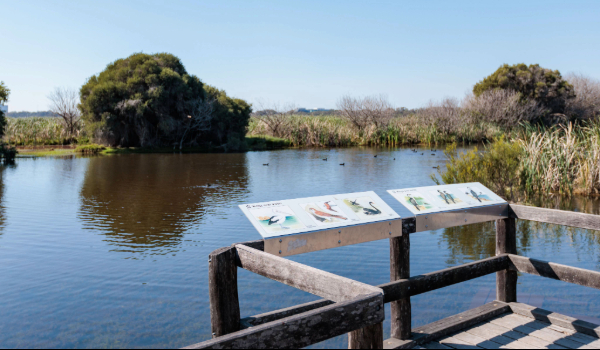
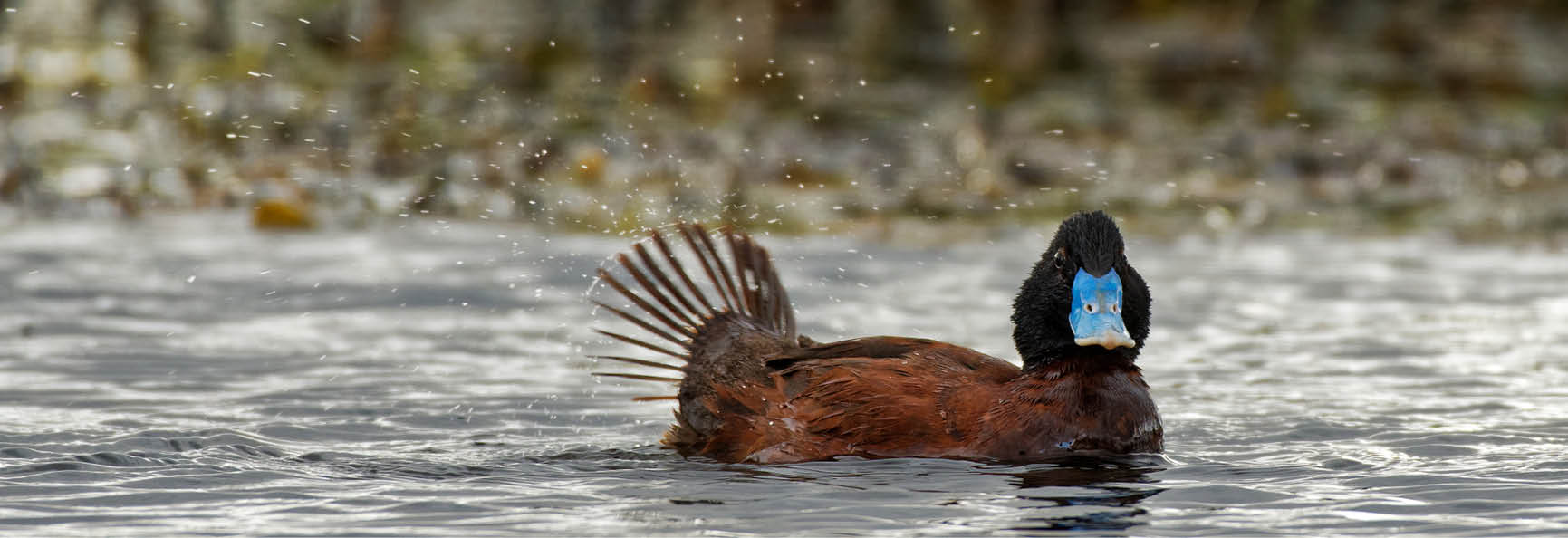
The City of Stirling has introduced fishing restrictions to protect our local lakes and wetlands and the native wildlife they support.
28 January 2026
20 February 2026
Last update date: 12 August 2026
The City of Stirling is home to a number of conservation reserves and wetlands, both natural and constructed.
These areas are among the most important and productive ecosystems we have. Wetlands supply fresh water, provide habitat and refuge for wildlife, improve water quality, store carbon, and offer spaces for recreation, learning and cultural connection. They also face ongoing pressures from urban development, climate change and invasive species, making community awareness and participation more important than ever.
The Parks & Environment team is responsible for managing the City’s wetlands. This includes on‑ground work such as vegetation and wildlife management, water quality monitoring, weed control and habitat restoration, as well as broader efforts to involve and inform the community about wetland health and resilience.
To ensure we listen and respond with a local focus, the City established the Talia Gardens, Princeton and Roselea Wetlands Working Group in February 2026. Twenty-eight local residents expressed interest in participating, creating a valuable forum for collaboration between community members and City staff.
Through a series of workshops and site visits, participants shared local knowledge, discussed challenges and opportunities, andhelped identify and prioritise actions for delivery over the next 12 months. Key areas of focus included habitat restoration, conservation volunteering, educational signage, youth engagement and community awareness.
The process identified a number of priority actions, including the development of a reserve restoration plan, expanded opportunities for community-led conservation activities, improvements to on-site education and signage, and partnerships with local organisations to deliver youth-focused environmental education. These actions will be progressively implemented over the next 12 months.
The Working Group has strengthened partnerships between the City and community, helping guide future wetland management while supporting the City's commitment to biodiversity conservation, environmental stewardship and community involvement. The group's work reflects the important role local knowledge, education and participation play in protecting and enhancing wetland environments.
The outcomes of the Working Group, including the priority actions identified through the engagement process, were presented to Council at its Ordinary Council Meeting on 7 July 2026, helping shape the future management of these wetlands.
During this phase, community members raised a wide range of questions about how the City manages these wetlands. We have carefully reviewed this feedback and prepared an initial set of responses across several key themes. These responses are intended to provide a shared starting point for discussion and learning, and to help frame the areas the Wetlands Working Group will explore in more detail as its work progresses. They are not intended to pre‑determine outcomes.
What is a wetland?
A wetland is an area where water is present either permanently or seasonally, creating conditions that support water‑dependent plants and animals. Under the Environmental Protection Authority’s 1992 Swan Coastal Plain Lakes Policy, a site must have at least 1,000 m² of water surface area by the first week of summer each year to be considered a lake/wetland under that standard.
What is wetlands management, in simple terms?
Wetlands management means looking after wet areas – such as lakes, swamps and marshes – so they stay healthy and continue to:
It combines science, land management and community involvement to ensure wetlands remain productive and sustainable into the future.
How does the City manage wetlands?
Wetlands management includes:
These efforts help protect the natural systems that keep wetlands functioning and resilient.
What defines a wetland vs a manmade lake/stormwater basin?
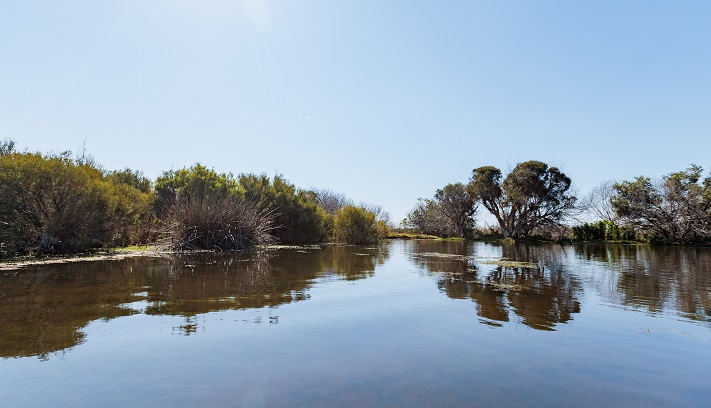
The Department of Biodiversity Conservation & Attractions defines a wetland in WA is as an area permanently, seasonally or intermittently waterlogged or inundated, whether natural or constructed, with water that can be fresh or saline. Wetland types include lakes, sumplands, damplands, palusplains, and more, with classification based on hydrology and landform. Urban stormwater basins can still be wetlands if their hydrology and ecological function meet wetland criteria (e.g., supporting wetland vegetation, wildlife, seasonal waterlogging).
What’s the source and flow of water in these urban lakes, and how might road works affect that?
Many of Stirling’s lakes are constructed wetlands receiving stormwater runoff from surrounding roads and suburbs – consistent with DBCA’s definition that wetlands may be naturally occurring or artificially created and influenced by surface water or groundwater changes. Road upgrades (e.g., Main Roads WA projects) can alter drainage patterns, affecting inflow, sedimentation and nutrient loading. The City addresses these through interagency coordination.
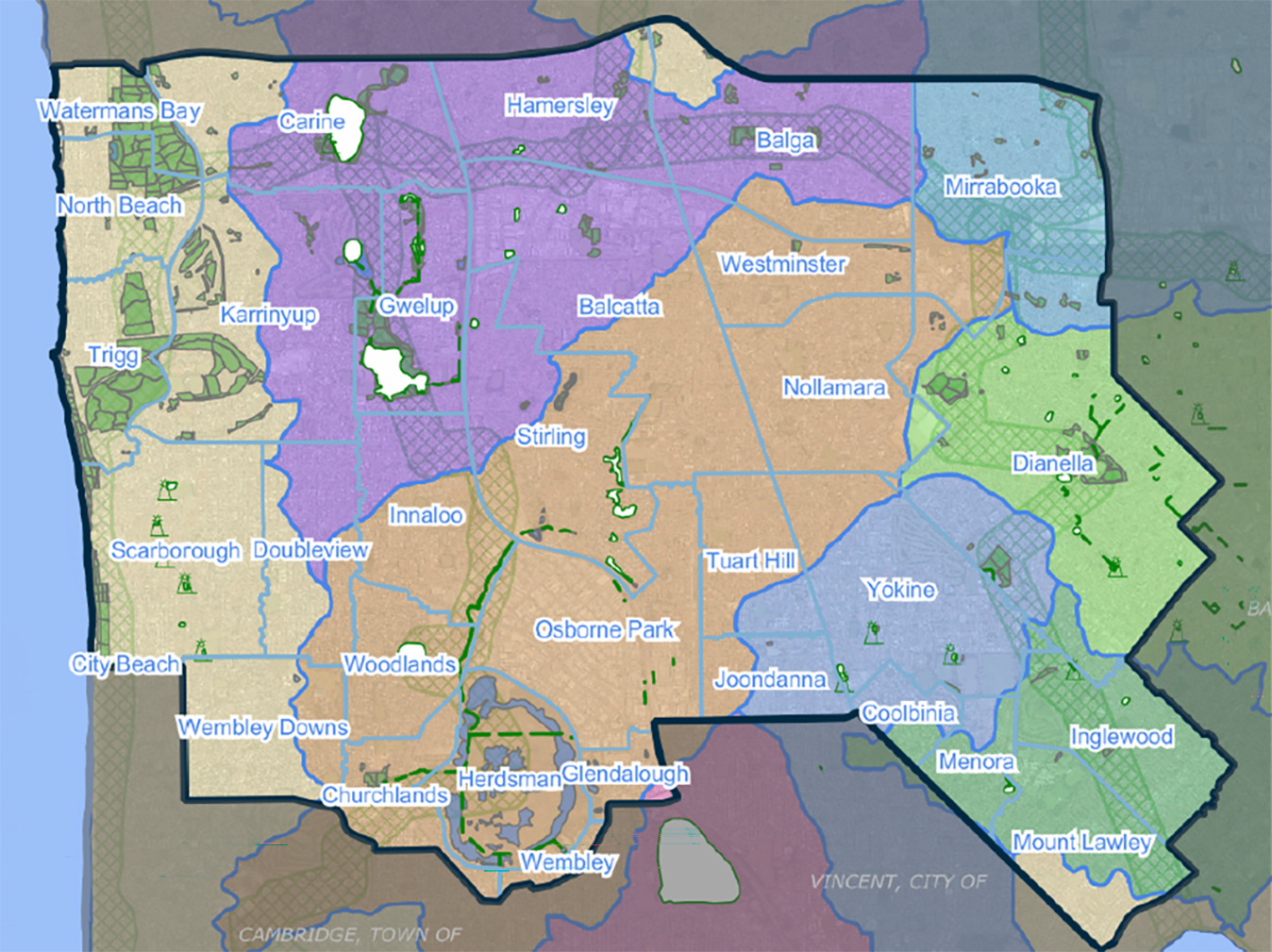
Surface water is primarily influenced by topography. The City has 8 sub-catchments which water is contained within. These are listed below.
How is the City going to protect wetlands and wildlife from further harm?
The City protects wetland wildlife through its broader conservation management framework, the Local Biodiversity Strategy, which prioritises maintaining ecological function, reducing threats and enhancing habitat across wetland reserves. Management plans sit under the City’s Local Biodiversity Strategy, which focuses on preserving areas for protection, addressing key threatening processes, and involving the community in biodiversity outcomes. The City’s conservation management framework addresses key objectives in the City’s Sustainable Stirling 2022–2032 plan by connecting communities with their local areas and supporting biodiversity in both natural and urban environments.
Can we improve habitat (e.g., plantings, buffers) to attract more “beneficial” bird species?
Wetlands can benefit from local native plantings, including vegetation that provides food sources, nesting habitat and shoreline buffering. The City’s Conservation Program is reviewed and updated annually, and reserves are prioritised for upgrades based on a range of factors including biodiversity value, threats present and existing management strategies as determined by the Reserve Condition Assessments. The City undertakes reserve maintenance inspections of all conservation reserves at a minimum of four times per year. This information determines the management actions required, such as weed removal, general maintenance, restoration or conservation infrastructure upgrades. We also take into consideration available budget and resources. Revegetation and habitat enhancing actions are consistent with the City’s conservation principles, which prioritise strengthening local biodiversity to improve ecological condition.
What species do these lakes support and how can that be extended?
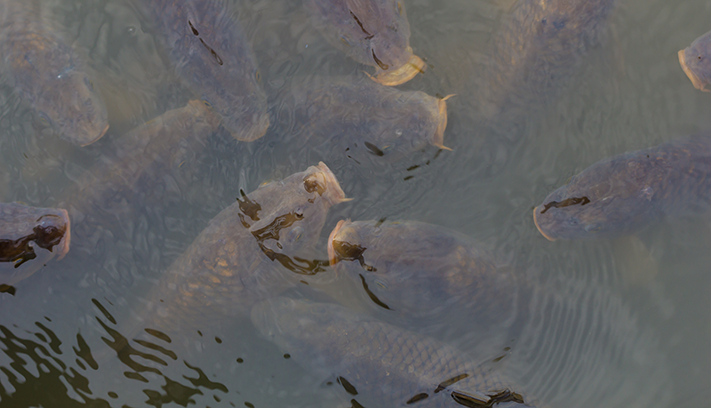
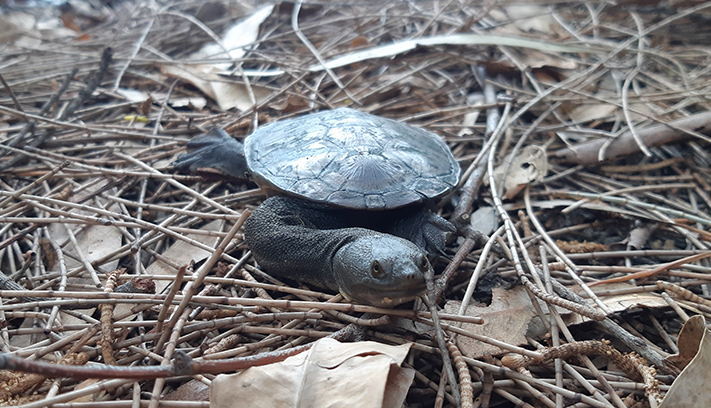
Many of Stirling’s constructed and natural wetlands support local native waterbirds, frogs, fish, and aquatic invertebrates, as well as some pest species. Improved species diversity relies on holistic ecosystem focus including expanding native vegetation, managing pest species, and monitor water quality, all of which are enabled through the City’s Local Biodiversity Strategy.
Why hasn’t there been stronger compliance/enforcement, and how will it improve?
It is recognised that as community expectations shift, there are opportunities to amend existing local laws, as is the current situation with fishing, and the City is progressing with this local law amendment which will be subject to final approval by the Joint Standing Committee for Delegated Legislation.
The City's approach to compliance and enforcement, including proactive compliance, reflects its responsibilities under relevant Acts of Parliament, Regulations and local laws. We aim to ensure there is a consistent approach in the undertaking of compliance and enforcement action ensuring transparency, procedural fairness and the principles of natural justice are followed.
The regulatory obligation to enforce local laws is applied through an engage, educate and enforce approach with the optimal outcome being voluntary compliance. Establishing structured community partnerships (e.g., the Wetlands Working Group, Recfishwest), among others supported by targeted messaging in the community.
Who does what (City vs State agencies) in wetland management and enforcement?
| Management | |
Waterbody | Waterbody | Surround Public Open Space/ Vegetation |
Roselea Lake | Water Corporation | City of Stirling |
Princeton - Candella Square (Merv Lake), Salerno Messina (Myah Lake) | City of Stirling | City of Stirling |
Talia Lake | City of Stirling | City of Stirling |
How are the wetlands managed for community use while protecting ecological values?
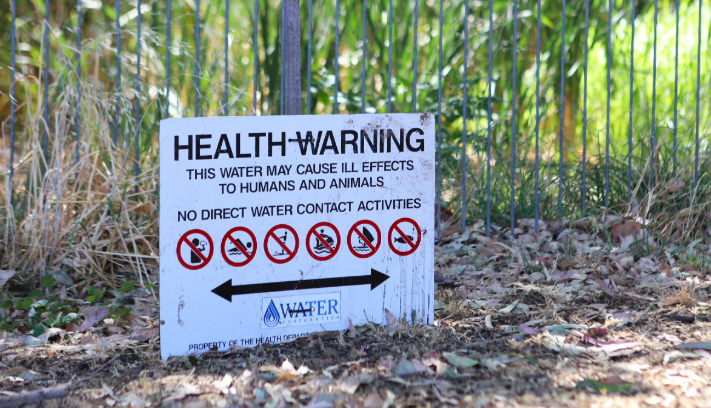
Wetland access (paths, viewing areas, passive recreation) is guided by site-level landscape designs and occasionally management plans, which aim to balance public enjoyment with ecological protection. Plans define how access, vegetation, and shoreline protection work together to maintain ecological integrity while keeping the wetlands open for community use. When environmental conditions pose risks (e.g., harmful algal blooms), the City restricts access and installs warnings to protect both people and wildlife. All principals of management are governed by the principals set out within the Strategic Community Plan and Local Biodiversity Strategy.
How can the City enhance community education and targeted behaviour change?
The City aims to expand education through the ‘Talia Gardens, Princeton and Roselea Wetlands Working Group’, which explicitly aims to:
This model aligns with the City’s Local Biodiversity Strategy, which identifies community engagement and education as essential to long term biodiversity outcomes. On-ground works and community involvement are also important activities for biodiversity improvement. The development of active, on-ground based Conservation Volunteers or Friends of Groups, assist the City to work in partnership with community to care for the environment.
How is the City monitoring water quality and addressing nutrients/algal blooms?
The City conducts ongoing water sampling of lakes at least twice a year. When blue-green algae is detected, the City follows Department of Health protocols on toxicity risk, water testing frequency, and community warnings. Nutrient issues are monitored and addressed as part of the City’s broader water management and water sensitive urban design approach, which aims to reduce nutrient inputs and improve water quality.
Why has the City introduced fishing restrictions at local lakes and wetlands?
The City has introduced fishing restrictions at 17 lakes, wetlands and coastal locations to help protect native wildlife and ecologically sensitive areas. The decision follows increasing reports of wildlife injuries, discarded fishing equipment and other harmful impacts associated with fishing activities. Following community consultation, Council resolved to introduce the restrictions, with protecting wildlife identified as the primary reason for support.
Can young people still go fishing within the City of Stirling?
Yes. While fishing is prohibited at specific lakes, wetlands and designated locations, people can continue to fish at many alternative locations, including most of the City's coastline and the Swan River. The restrictions are designed to protect wildlife in sensitive areas, not prevent recreational fishing across the City.
 Related news
For more information, or to receive this information in an alternate format, please contact the City on (08) 9205 8555 or visit www.stirling.wa.gov.au/enquiry.

City of Stirling kaadatj Nyoongar moort Nyoongar boodja-k Wadjak boodja-k. Ngalak kaadatj Nyoongar nedingar wer birdiya koora koora wer yeyi. Baalabang koondarm, malayin wer nakolak baalap yang ngalany-al. Ngalak dandjoo barn wer kaaratj bandang boodja-k.
The City of Stirling acknowledges the traditional custodians of this land, the Wadjak people of the Nyoongar Nation, and pays respect to the Elders both past and present for they hold the memories, the traditions, the culture and hopes of Aboriginal Australia.