11 September 2026
On the Verge of a change? Share your feedback
Ahead of reviewing the Parking Local Law, the City of Stirling is seeking community feedback on one of the current verge parking requirements.
11 September 2026
01 October 2026
Last update date: 05 October 2026
Ever wondered what you can (and can’t) do with your verge? You’re not alone. Whether you’re on the verge of a meltdown, mystery or misunderstanding, this page is here to help make things simple, safe, and even a little fun.
From parking dilemmas to maintenance responsibilities, verge questions pop up all the time. We’ve been unpacking them one verge at a time, helping to explain the rules and opportunities that come with this often-overlooked part of our streetscape.
We've compiled your most frequently asked questions in our 'Your FAQs answered' section below, helping to shed light on some of Stirling's most talked-about verge topics.
Now, we're turning the tables and asking you a question.
On the Verge of a change?
As the City prepares to review its Parking Local Law, we recently sought community feedback on one of the current verge parking requirements.
At present, the requirement is that trailers, motor homes and caravans unattached to a motor vehicle cannot be parked on any portion of a thoroughfare, including residential verges.
We asked whether you support or object to allowing these vehicles to be parked on residential verges.
It's a topic that's often parked in our inbox. Some residents have told us they’d value the convenience of storing these vehicles close to home, while others share concerns about safety, access and streetscape appearance.
Consultation has now closed.
Thank you to everyone who shared their views. We’ll review the feedback received to help inform the City’s consideration of this issue as part of the Parking Local Law review.
Can I put a trampoline on my verge?
You’ll need approval before placing play equipment on your verge. Assessment factors include whether there is already space on your property to place the item, safety distances (a minimum of two metres from footpaths, roads and driveways), and any potential impacts on street trees. To apply, email development@stirling.wa.gov.au with your name and address, details of the equipment, and a simple sketch showing where you intend to place it.
Can I create a parking bay on my verge? What materials are allowed?
Yes, this can be done by submitting a free Verge Treatment Application. In general, up to one-third of your verge area (excluding the crossover) can be treated as hardstand using materials such as concrete, brick paving or synthetic turf. Assessment factors include distances from street trees and whether kerb modifications are possible. If there is enough space to park another vehicle entirely within your property, you may be able to apply for a second crossover instead, via a free Residential Crossover Application.
Can I use gravel or pebbles with a stabilisation grid in my native verge garden?
For now, gravel and pebbles are not permitted as part of verge treatments. This may change in the future as part of the review of the Public Thoroughfares and Local Law 2009.
Who looks after the verge when one property sits behind another?
The verge is maintained by the property that directly adjoins it, being the street-facing (front) property.
Can I store a caravan on my verge?
No. Under the Parking Local Law, trailers or caravans unattached to motor vehicles aren’t permitted on verges. The same applies to buses and commercial vehicles with a GMV in excess of 2.5 tonnes, helping keep streets safe and accessible for everyone.
Can I use barriers or signage to stop parking or protect vegetation?
In short, placing spikes, ropes, barriers, or signage on the verge is not allowed. Low-lying plants (no higher than 750mm) can be used to help discourage parking, provided a clear, continuous pathway of at least 1 metre in width is maintained within the verge to allow for safe and unobstructed pedestrian movement. Property owners and occupiers can apply for formal “No Parking on Verge” signage to help keep verges clear and safe. Such signage would apply to everyone, including the resident, and parking in that area could result in an infringement. For information on eligibility and the application process, view the City's Verge Parking Restrictions Information Sheet.
What can I do about a vehicle parked on my verge?
If a vehicle is parked on your verge without your approval, you can contact the City and ask for a Community Safety Officer to attend and inspect the vehicle. You’ll need to meet the Officer onsite to identify the vehicle and sign a form enabling further action. If you believe the vehicle is abandoned, it’ll be investigated and potentially removed.
Can the City take action if plants from a private property are impacting a verge tree?
Yes. Vegetation growing from private property should not adversely affect City assets, including verge trees. This is no different to vegetation that overhangs a footpath. Where private vegetation is affecting the thoroughfare, obstructing access, or impacting a City asset, residents are encouraged to report the issue to the City. A City officer will investigate and where appropriate request the property owner to cut back the vegetation.
Can I create a native garden on my verge so there’s no grass at all?
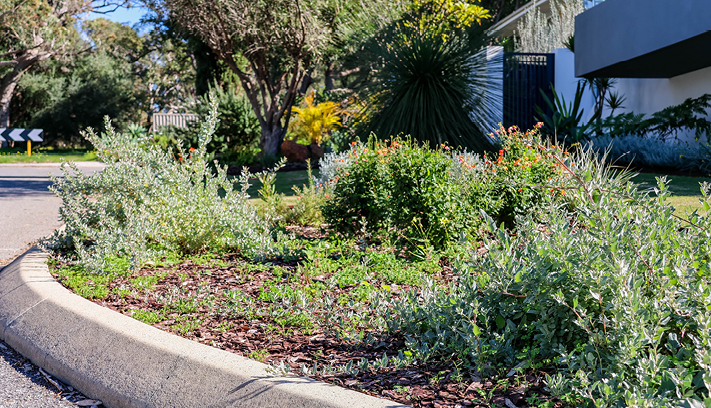
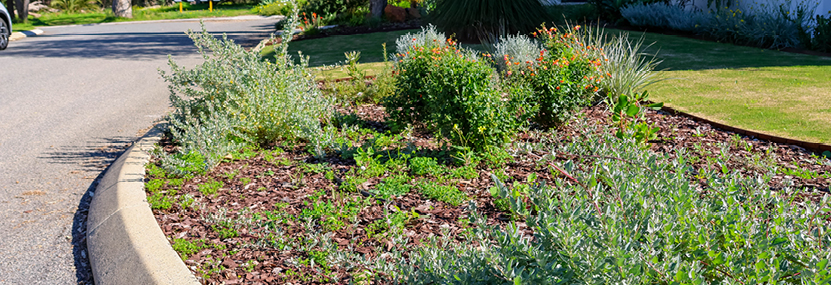
Yes. You can replace your verge lawn with a native garden and remove the grass entirely. If there’s no existing footpath, you’ll need to provide a minimum 1 metre-wide pedestrian path within the first 2 metres from the kerb. Plants must also be kept below 750mm in height to maintain visibility and safety. If you'd like to discuss your design before getting started, contact the City and we can provide guidance.
What does the City do about non-compliant verges?
If you believe a verge treatment is non-compliant, please report it to the City. An officer will investigate and determine whether the verge treatment complies with the City's requirements. Where non-compliance is identified, the City will work with the property owner to rectify the issues and ensure the verge treatment is safe and compliant.
What can I use to border my verge garden or tree?
Timber, brick and plastic edging can generally be used to border a verge garden, provided it is installed flush with the verge surface so it does not create a trip hazard. Edging must not be installed within 2 metres of a street tree to protect roots and allow for future maintenance. If you're considering verge edging, contact the City first to ensure your proposal meets the City's requirements.
How can I get free mulch for my verge?
The City's annual verge mulch incentive helps residents create waterwise, native verges by reducing lawn and paving. Registrations for this year's program have now closed. To be notified when registrations open again in 2027, sign up to the City's Living Green newsletter.
How can I report a verge issue?
To report a verge issue or lodge a general enquiry, call the City on (08) 9205 8555 or submit a request via the City's Contact Us webpage.
Our verge tree is damaging our property. Who’s responsible? What can be done about it?
If you believe a verge tree is causing damage to your property, please lodge a request for maintenance. A Parks Officer will inspect the tree and surrounding verge area to assess the situation and determine any necessary action.
Is parking allowed on verges at parks, public open spaces or similar, especially if there is irrigation infrastructure that could be damaged?
Yes. Parking on verges adjacent to parks, reserves and other public open spaces is generally permitted, provided there is no signage indicating parking restrictions or prohibitions. However, motorists should take reasonable care to avoid causing damage to public infrastructure, vegetation or irrigation assets.
How does the City help keep verges, footpaths and crossovers accessible for people with disability?
The City has officers regularly inspecting streets and public areas to identify overgrown vegetation, obstructions and other issues that may affect access along verges and footpaths. When issues are identified, the City works to have them investigated and rectified. However, it is not always possible to identify every obstruction immediately. If you notice overgrown vegetation, blocked footpaths, or any other accessibility issue, please contact the City so that an officer can investigate and arrange appropriate action.
Can I install seating or a Little Street Library on my verge?
No. Structures, including seating and Little Street Libraries, are not permitted to be installed on the verge. Verges are part of the public road reserve and must remain free from unauthorised structures to ensure safety, accessibility and unobstructed use by pedestrians, utility providers and maintenance crews. If you are considering installing seating or a Little Street Library, they should be located on private property and not within the verge area.
Can I request for the City to install a native garden on a non-residential verge near me (e.g. the verge of drainage sump)?
The City recognises an increased interest from the community for greening opportunities on City land and is working towards identifying a process to support these community-led, City greening community garden projects.
Need technical policies, requirements or permit applications? Streets, verges, crossovers and traffic is where you’ll find all the official and authoritative information.
Want to know more about footpaths on verges? Head to the Footpaths program page.
Planning a waterwise native verge? Living green is your go-to for garden guidance.
Need help with verge issues right now? Enquiries is where you can report or request verge matters like trip hazards.
Use those page for the formal steps, then come back here for the simple, fun version.
Official documents including the Verge Treatment Policy, Verge Treatment Guidelines and Crossover Policy are also set for review so check back regularly for easy-to-understand updates as they become available.
Verge-related issues come up frequently during community engagements and customer enquiries, especially around overgrown vegetation, verge or footpath hazards, and breaches of permit conditions.
Myth 1: “Council is responsible for maintaining verges.”
While verges are public land managed by the City, the maintenance of verge treatments is the responsibility of the adjacent householder. This includes mowing lawns, weed control, pruning native gardens, topping up mulch and maintaining approved pavement or synthetic turf.
The City is responsible for maintaining street trees and footpaths. The City also mows verges on major roads only that require traffic management. If a verge elsewhere becomes unkempt to the point that it creates a safety or visibility issue, the City may step in to carry out a basic tidy-up only, with clippings left on site.
Myth 2: “I can do whatever I want with my verge.”
Not quite. Verges are public land, so there are rules to keep streets safe, accessible and functional.
You can personalise your verge but only within the City’s guidelines. Some things require approval (like paving or synthetic turf), and some things aren’t allowed at all (like hazards, obstructions or damaging tree roots).
The goal isn’t to restrict creativity. It’s to make sure verge treatments are safe for pedestrians, protect underground utilities, and remain accessible.
Myth 3: “Anyone can park on anyone’s verge.”
Parking on a verge requires the adjacent householder’s permission, unless signage or rules say otherwise. Even with permission, or when parking on your own verge, you cannot park commercial vehicles, buses, trailers or caravans (unattached to a motor vehicle). Parking that blocks sightlines, damages infrastructure, or creates safety hazards can result in fines.
By contrast, anyone can park on the street in front of a property unless signage indicates otherwise. This includes vehicles such as trades vans parked on the street while building or renovating a home.
Myth 4: “Council does nothing about rubbish dumped on verges.”
Dumping rubbish on verges is illegal and can result in fines.
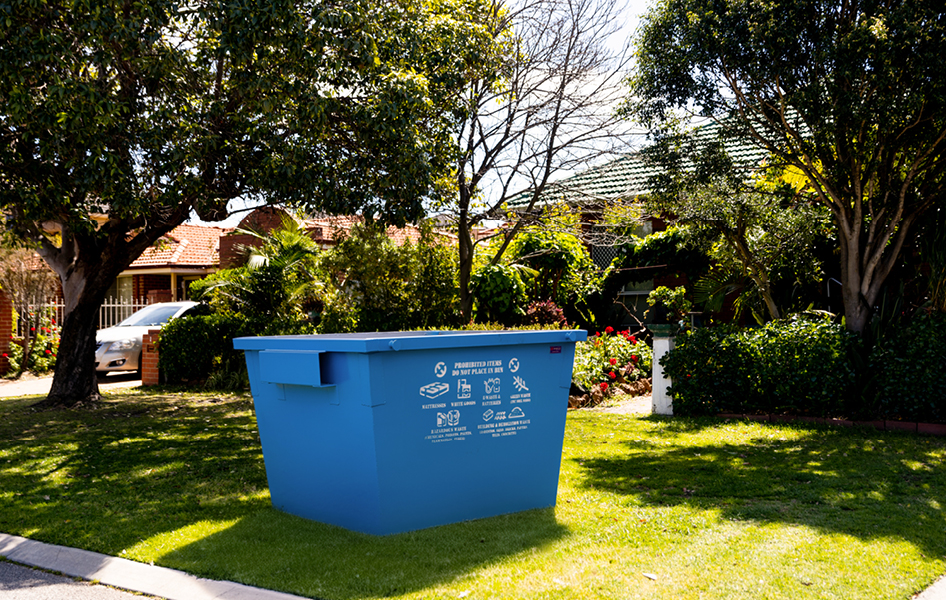
Residents have plenty of legal disposal options, including skip bins, recycling centres and scheduled waste services. Skip bins must be placed safely to avoid obstructing footpaths or sightlines.
If you spot illegal dumping, you can report it to the City. The City investigates reports and arranges appropriate clean-up where needed, and may issue infringements to those responsible.
Keep the conversation going by checking this page regularly for updates on residential verges. We’ll share new FAQs, videos, practical tips and information that responds to the questions, experiences and feedback we hear from our community.
 Verge News


City of Stirling kaadatj Nyoongar moort Nyoongar boodja-k Wadjak boodja-k. Ngalak kaadatj Nyoongar nedingar wer birdiya koora koora wer yeyi. Baalabang koondarm, malayin wer nakolak baalap yang ngalany-al. Ngalak dandjoo barn wer kaaratj bandang boodja-k.
The City of Stirling acknowledges the traditional custodians of this land, the Wadjak people of the Nyoongar Nation, and pays respect to the Elders both past and present for they hold the memories, the traditions, the culture and hopes of Aboriginal Australia.