
Applying a light-touch approach
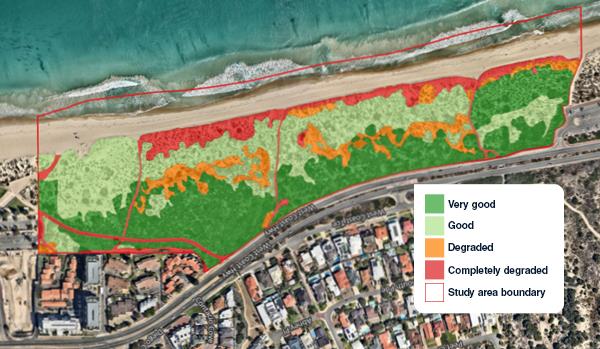
"Applying a light-touch approach" is one of the three core design principles that has guided the development of concept designs as part of the City's Coastal Boardwalk Feasibility Study.
The City of Stirling manages a 7km stretch of coastline that includes popular destinations at Scarborough and Trigg.
Giving people the opportunity to access these beautiful beaches while ensuring their protection is a careful balancing act.
That is why applying a light-touch approach has been one of the three core design principles guiding the development of concepts as part of the City’s Coastal Boardwalk Feasibility Study.
A boardwalk connecting Scarborough and Trigg beaches must be designed to minimise impacts on the natural environment, protect the area’s biodiversity and maintain the site’s natural integrity.
The study area is situated within an A Class Reserve, is classified as a Bush Forever site and contains a threatened ecological community (TEC) of Rottnest Island pines (callitris preissii), so environmentally sensitive design is critically important.
While boardwalks in environmentally sensitive locations are common, government stakeholders have been engaged early in the process so that regulatory requirements and best practice methods can be considered in the concept design development.
Independent studies and surveys completed during the feasibility study have also informed the concept design which outlines the proposed route, materials and construction method.
The concept design for the boardwalk shows a journey that follows a path of degraded vegetation through the dune system, maintaining a buffer of at least 15m from the sensitive TEC area.
The boardwalk is elevated to enable restoration efforts and support wildlife movement.
It is also situated largely to the east of the 2070 erosion vulnerability line identified by the City’s Coastal Hazard Risk Management and Adaptation Planning, ensuring that the proposed boardwalk is not located in a vulnerable area.
Screw piling foundations negate the need for concrete footings and access during construction would occur from the beach or existing dune tracks where possible to minimise disturbance to flora and fauna
The concept design suggests the use of sustainable materials that can withstand coastal conditions, with the boardwalk primarily constructed of recyclable fibre-reinforced plastic – a lightweight, durable and low-maintenance material that can integrate with the landscape.
To learn more and submit your feedback by 30 August, visit the Coastal Boardwalk Feasibility Study webpage.


