
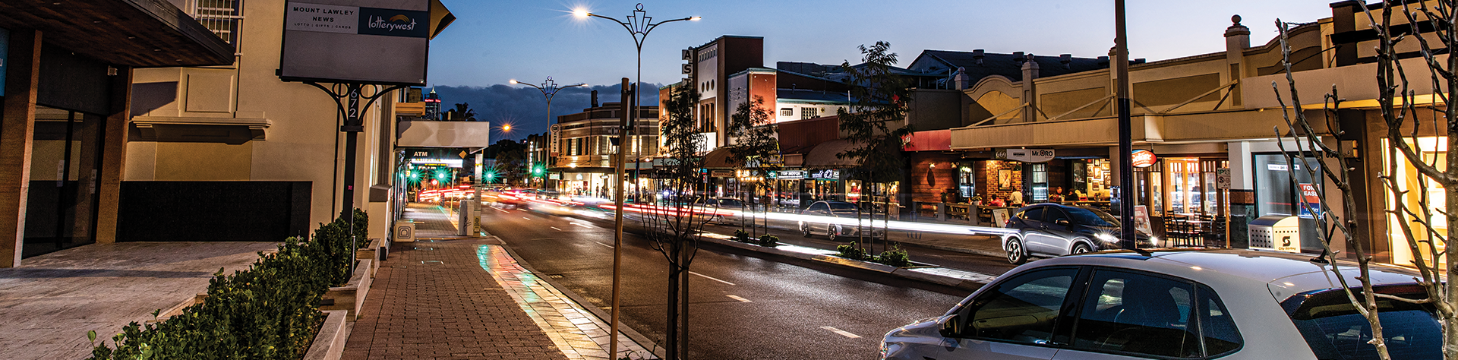
This short walk of less than a kilometre, starts or finishes at the Astor Theatre, allowing visitors to meander through one of the City of Stirling’s most significant architecturally preserved streets.
Learn about the history and heritage of the suburb through stories captured in bronze on a series of ten new plaques. Keep an eye out for established plaques that also contribute to the story of Beaufort Street.
With a history dating back to the early 1830s, Mount Lawley has evolved with unique architectural styles including Federation, Queen Anne, Colonial, Art Deco, and Californian Bungalows. The heritage site markers provide engaging stories of notable people and places, offering a rich historical experience.
At the end of the walk, why not enjoy some refreshments at one of the many cafés along Beaufort Street.
Mount Lawley - Heritage Walk
Distance: 1 km
Duration: Casual stroll of half an hour
Route: Walk from Copley Park south to the Astor Theatre; or start at the Astor Theatre and walk north to just past Perth College. The first plaque can be found on the corner of Queens Crescent and Beaufort Street
New plaques
Walk from south Perth College (corner of Queens Crescent and Beaufort Street) to the Astor Theatre or start at the Astor Theatre and walk north to just past Perth College to find the first plaque, Windsor Hall.
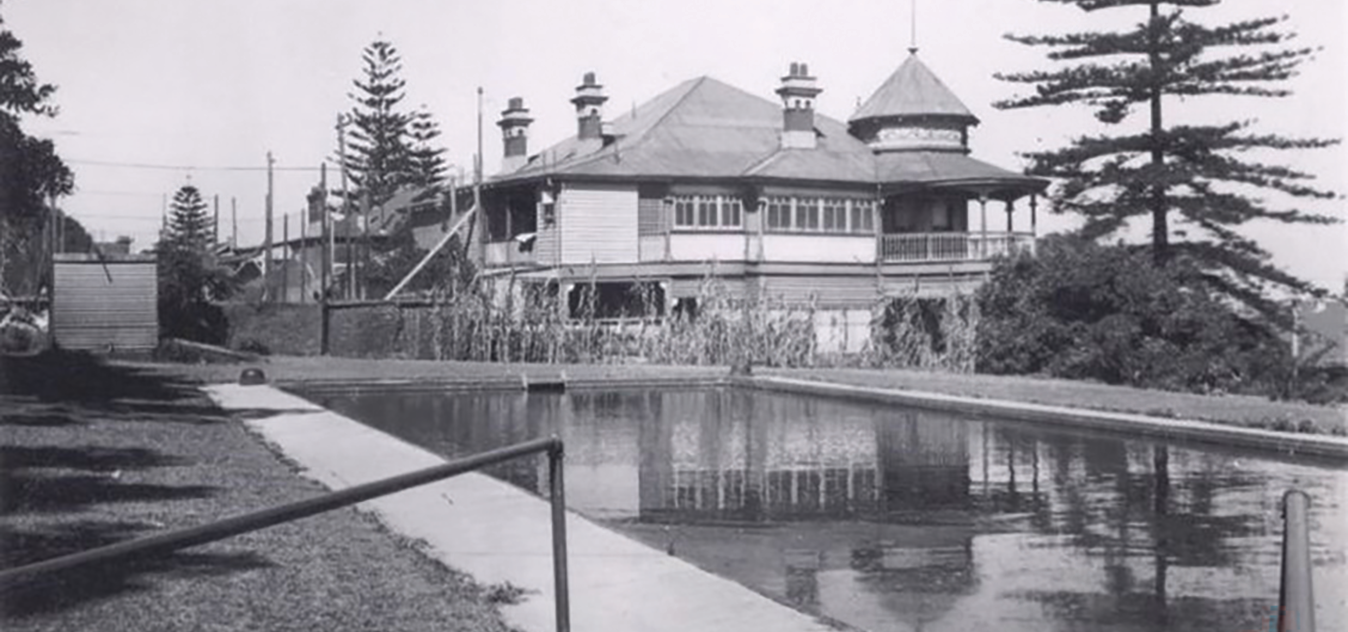
36 Queens Crescent, Mount Lawley
Windsor Hall is a stately residence designed in 1903 by Henry James Prockter and stands as a rare example of Federation Free Style architecture in the Mount Lawley Estate. Prockter was an English architect who moved first to Tasmania in the 1880s and then to Melbourne, and to Perth in 1896. Windsor Hall was one of the first residences built in the neighbourhood, and its construction helped establish the visual and social character of the area. The home has features that are examples of Proctor’s expressive and interpretive style with a large hipped and gabled roof, and a shaped gable at its eastern end.
Marion Haynes was the original owner of Windsor Hall. Marion was the widow of Richard Septimus Haynes, who was a solicitor, King’s Counsel, and radical political figure in Western Australia. Richard ‘Dicky’ Haynes came from New South Wales and had moved to Perth in 1885, leaving a lasting impact on the city's political landscape. His roles included Perth City Council member, MLC for Geraldton, Mayor of North Perth, Perth Road Board member, and Consul for Norway. Haynes also chaired the local Board of Health, drafting legislation with his legal expertise. He was also involved with local amateur theatre. Dicky Haynes passed away in 1922 Windsor Hall was acquired by Norman Stanley Craven in 1928. Under Craven's ownership, the upper floor was transformed into two flats and were leased until the early 1950s.
During World War II, from 1942 to 1945, Windsor Hall served the Australian Army as an Officers’ Club. The Kellow family, who took ownership after the Cravens, returned to Windsor Hall after the end of the War. The Kellows remained custodians of Windsor Hall until its sale in 2024, nearly 90 years later.
Significant repairs and restoration work was undertaken by Diane Summers, a fourth generation descendant of the Kellow family, ensuring Windsor Hall's preservation for the future, which garnered a City of Stirling Heritage Award. Windsor Hall is now owned and cherished by Perth College.
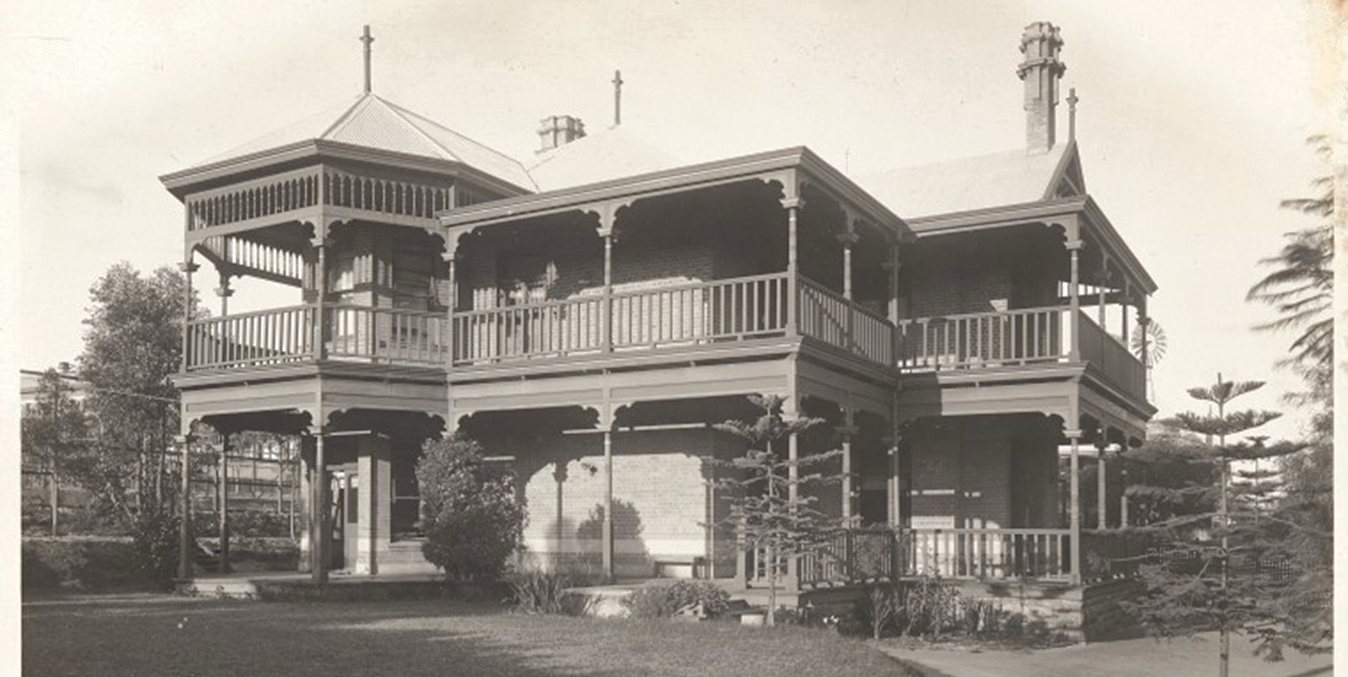
700 Beaufort Street, Mount Lawley
The distinguished Hampstead residence, a Federation-style building, was established in 1907-8 at 700 Beaufort Street.
It appears listed in the Wise's Post Office Directory in 1909, with Albert Birch, a draftsman in the WA Government Lands Department, as its first resident. Albert, an alumnus of Carlton College in Melbourne, was married to Eunice (nee Halliday) and they had three children: Edmund (1898–1976), Evelyn (1899–1993), and Harold (1907–2011). The Birch family were residents at 700 Beaufort Street until 1914, when they moved to London.
Hampstead was used as a rest and convalescent home during the tumultuous years of World War I, from 1914 to 1917. Following that, until 1920, it was run by Nurse Bevan as Kialla Private Hospital. In 1922 Perth College’s Sisters use it as a hostel, and later the school used it as their Intermediate School.
The house was demolished in 1960.
Albert's journey after 'Hampstead' was one of varied experiences. Eunice returned to Perth, where she later succumbed to cancer in 1925. Albert ventured to India, where his son had established a racehorse breeding business. Eventually, he returned to Western Australia and went to work on a farm in Coolup owned by a relative, also named A. M. Birch, where he suffered a severe burn injury to his arm. In his later years, Albert lived in a rented room in West Perth.
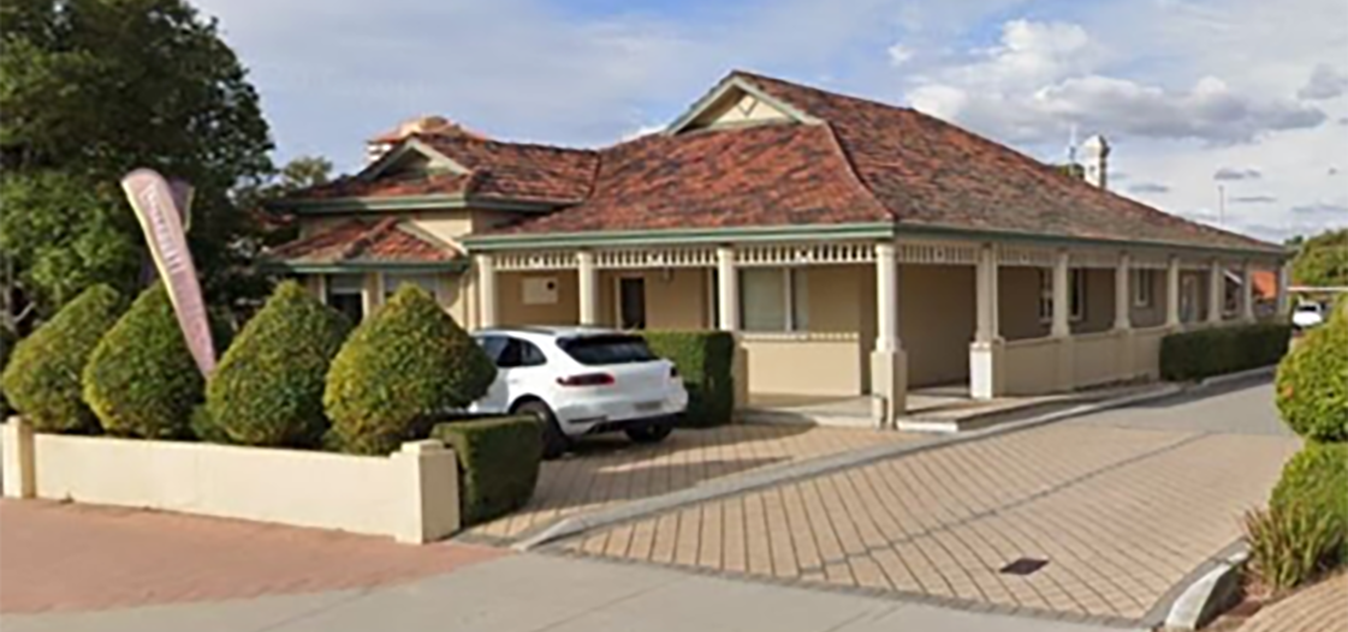
692 Beaufort Street, Mount Lawley
The Cohen family residence was established in 1915 and built in a Federation architectural style. Alexander Cohen (1862–1919) was an English optician who ventured into construction after emigrating to Australia. With his brother Maurice, Alexander contributed to Perth's cityscape by building the Royal Arcade and the Brisbane Street Synagogue. His union with Dora Kott, a widow with four children, led to a blended family of eight, with notable members like Gabriel Cohen and Max Kott, both World War I veterans.
Max Kott (1891–1975) made his mark in the legal world as the managing partner of Kott Gunning, a law firm that witnessed 102 years of operation. The family also included Leon (1902–1957) and Ruby Violet (1906–1969). Following Alexander's demise, Dora continued to inhabit the house until her death in 1930, after which it was sold since Leon had relocated to 118 First Avenue, Mount Lawley.
Leon and his wife Doris, who wed in December 1925, were parents to Alexander Keith Cohen (1926–2019), later known as Professor Alex Cohen, FRACP. An esteemed endocrinologist, he held prestigious positions such as Chancellor of the University of Western Australia, Director of Postgraduate Education at Sir Charles Gairdner Hospital, and President of the Royal Australian College of Physicians. He was a Member of the Order of Australia. Professor Cohen's philosophy on his profession was profound: "Medicine is the most privileged life one can have; the physician has no vested interest other than the well-being and benefit of the patient”.
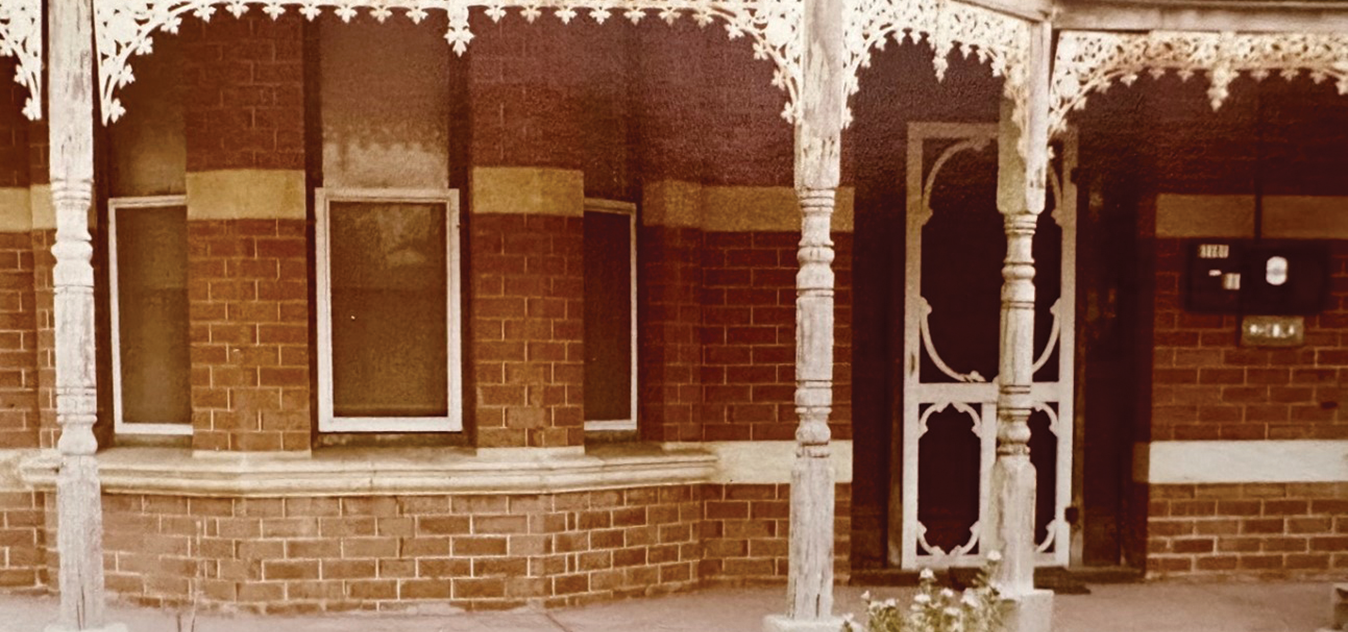
690 Beaufort Street, Mount Lawley
The house at 690 Beaufort Street, built in 1903 by the Schruth family, is a fine example of Federation Queen Anne style. The house was leased until 1933 when William Otto Schruth (1882–1957), his wife Maud (nee Keegan), and their children, Odee Ludwick and Mylie Maud, moved back into the property.
The Schruth family moved to Western Australia during the goldrush era. German-born William Schruth was a prominent local entrepreneur with interests in various businesses.. He owned Schruth’s Royal Hotel on Wellington Street from 1894–1905, built a store at 235-237 Newcastle Street in 1905, and owned the Beaufort Arms, also known as Schruth’s Beaufort Arms Hotel, on the corner of Beaufort and Newcastle Streets (1908–1920), the Aberdeen Hotel in Northbridge, and Morris Bros Ltd at 80 Barrack Street, which imported pianos and musical instruments until its liquidation in 1940.
William’s son Odee later established Morris Radio Repairs at 44 St Georges Terrace, also conducting radio repairs from the Beaufort Street home. The Schruth family's legacy includes several buildings in Subiaco and Albany, now listed on the State Heritage Office Inventory.
The residence remained in the family until 1992 after Odee's death. It was then sold to Perth College by William's niece, Dawn Dobson, a former student, for school use. Perth College later sold the house.
In 2020, the proposal for the demolition of number 692 Beaufort Street and a partial demolition of number 690 was submitted to the City of Stirling. The plan encountered community feedback, leading to the preservation of the properties. The enduring value of the house is highlighted by its longstanding ownership by a single family until 1993. It falls into the Mount Lawley Heritage Protection Area.
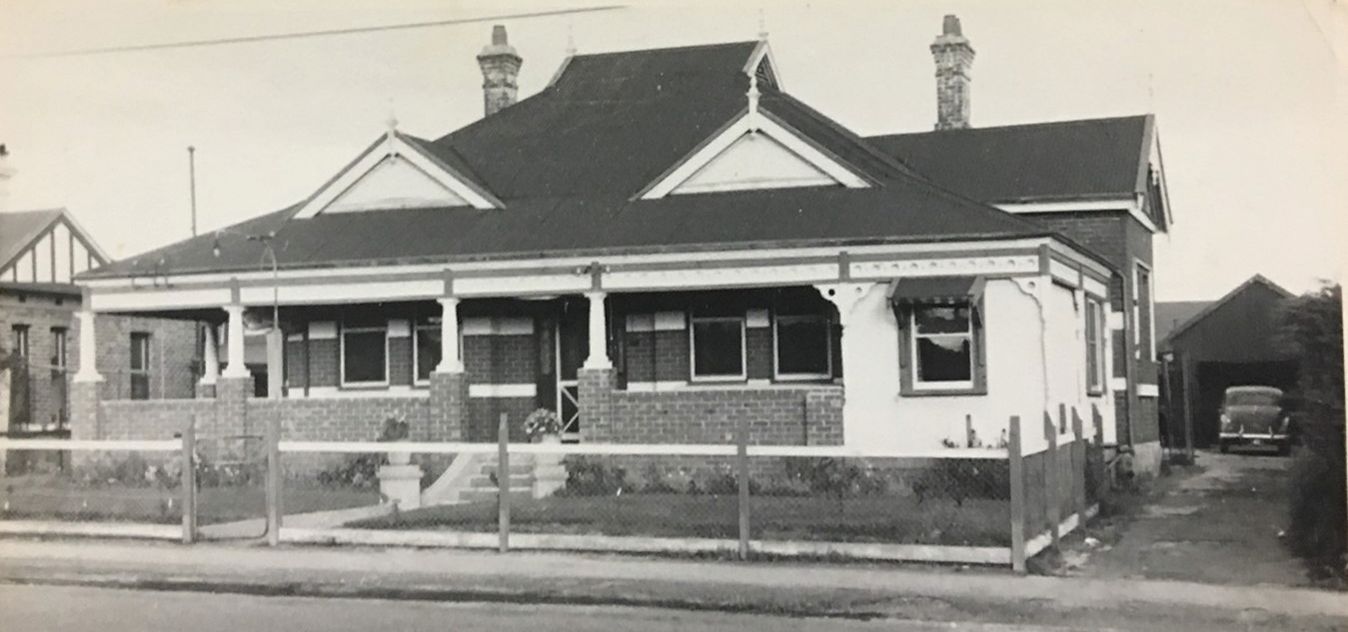
688 Beaufort Street, Mount Lawley
The residence at 688 Beaufort Street, constructed in the early 1910s, has a hipped and gabled roof that extends over a full veranda, supported by circular columns and framed by traditional sash windows. The house is set back from the street behind a metal post and rail chain link fence in a garden featuring jacaranda trees.
This architectural gem has been home to a succession of notable individuals, including Mr. Robert Everett, police magistrate Algernon Stratford Canning, and medical practitioner Dr. Patrick O'Meara, before becoming the cherished abode of the Arkle family for over a century.
Dr. James Vere Arkle, a London-trained medical practitioner who emigrated to Western Australia in 1907, initially practiced in Kalgoorlie for twelve years. Following this, he settled in Perth, where he lived and worked for the remainder of his life, excluding his war service with the First A.I.F. In 1923, Dr. Arkle, along with his French wife Marie Aimee Andree (née Montagnier) and their two sons, Hunter Miles and Telfer Vere James, moved into the Beaufort Street residence. The house also served as a medical practice and Dr A.J. Blofield-Moody (Dr. Arkle's partner) was also listed as practicing at the same address.
In the 1940s, the Arkle family expanded their property by constructing the Waihemo Flats, an Art Deco style block of apartments at 686 Beaufort Street, on the site of their former tennis court.
Dr Arkle’s son, Hunter Miles Arkle, became a lawyer in 1949, having formerly served in the armed forces. The older son, Telfer, lived with a disability following childhood meningitis, also resided at 688 Beaufort Street. Hunter's wife, Eleanor Kathleen "Kay" (née Hall), moved into Flat 1 of the newly built Waihemo Flats.
By then a widower, Dr Arkle passed away on 20 March 1952 and Hunter, Kay and their children, Andree and John, moved into the main house. The children spent their formative years there, growing up amidst the rich history and enduring legacy of their family home. As of 2024, the Arkle family still retains ownership of 688 Beaufort Street, although the Waihemo Flats were sold in 2023. This residence, with its storied past and architectural significance, reflects the enduring spirit of the Arkle family and the historical tapestry of Perth.
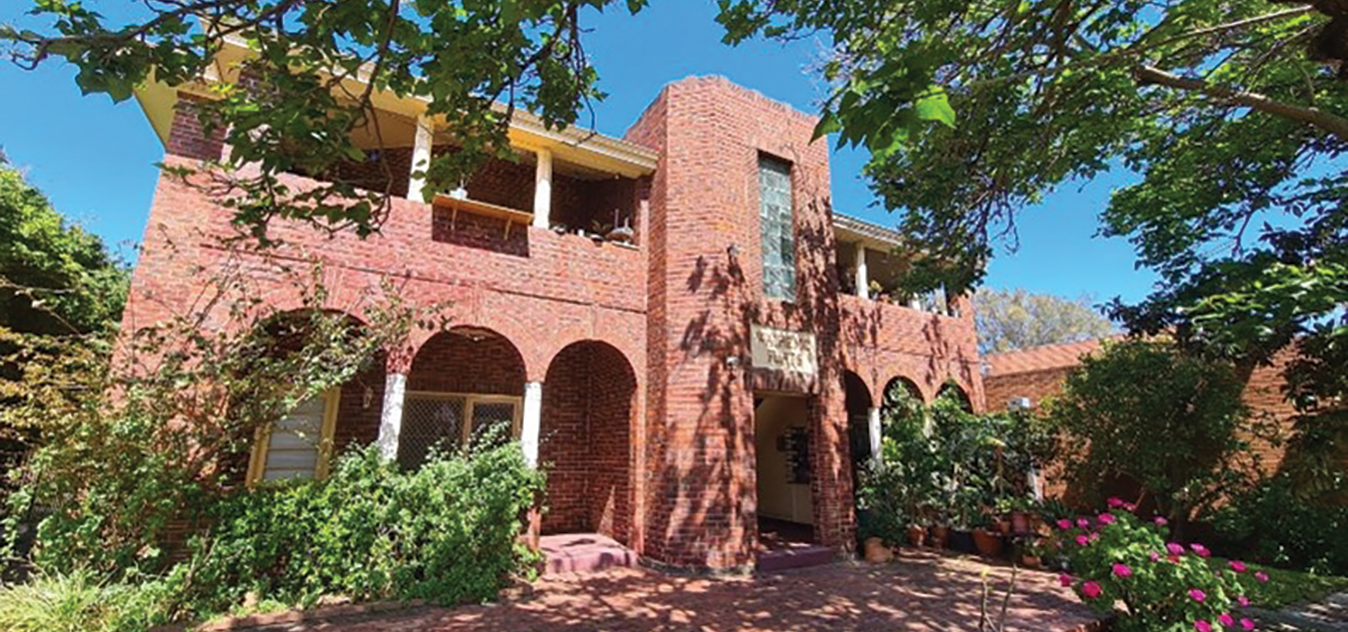
686 Beaufort Street, Mount Lawley
The Waihemo Flats building at 684-6 Beaufort Street, crafted in the distinctive Art Deco style of the 1930s, is a historical landmark built by the Arkle family. The name 'Waihemo' pays homage to the family's roots in Palmerston, Otago, New Zealand, from where James Arkle emigrated. The building stands on what was once a tennis court in the Arkle family's large side garden, adjacent to their home at 688 Beaufort Street. This is a rare example of an Interwar Art Deco apartment in Western Australia. Nestled within a leafy garden set back from the bustling street, the Waihemo Flats are enveloped by a lawn and mature trees, creating an oasis of tranquillity amidst urban life.
These flats are emblematic of Perth's economic and social revival during the Inter-War period. The 1930s saw a surge in the construction of two-storey apartment blocks in inner-city suburbs, driven by the demand of city workers who valued proximity to urban centres and railway connectivity. Today, the Waihemo Flats remain a cherished piece of Perth's architectural heritage, a physical narrative of the city's growth and the enduring legacy of the Art Deco movement.
The building has red brick and a hipped tile roof. Stairs are accommodated in a central tower with apartments on either side. Balconies are supported by circular columns and a solid balustrade shields inhabitants from view.
The Arkle family kept flat number one for themselves, leasing out the remaining three. Historical records from the Wise Postal Directories of 1942-43 reveal the names of the tenants, including Miss L. Savage, Mrs Howe, and Mrs Edes, with one flat unoccupied at that time. By the following year, all flats were filled, housing Mrs Arkle, Mrs Edwards, Mrs Howe, and Miss Una Yde.
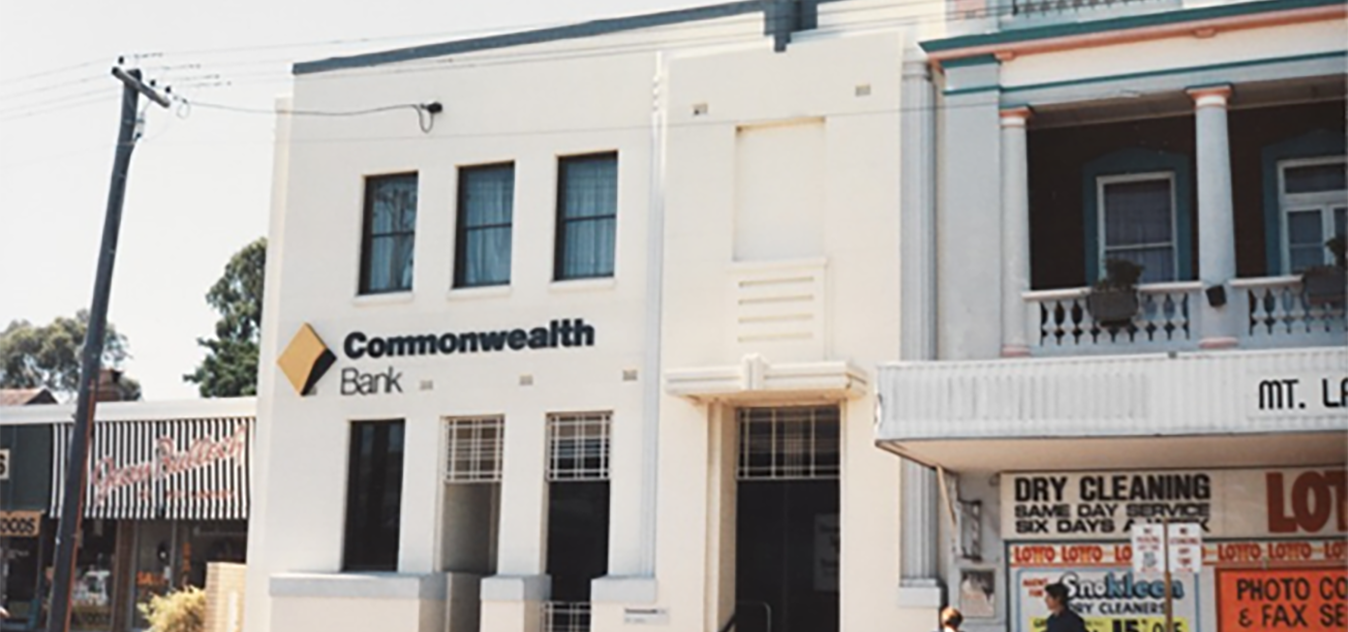
670 Beaufort Street, Mount Lawley
Constructed in 1938 by A. Hill, the two-storey Commonwealth Bank building at 670 Beaufort Street stands as a prominent example of the Inter-War Art Deco style. It was designed by the architectural division of the Department of the Interior. A newspaper article in 1938 described the building, stating that it was built at a cost of £4,500 to be a two-storey branch of the Commonwealth Bank of Australia. The inside layout reflects the practicality and grandeur of the time, with the ground floor hosting a main office, a secure strong room, a manager’s office, and a lunch room. The upper floor comprises three bedrooms, a living room, a lounge, a kitchen, and a maid’s room. The glass used in the building was chosen to minimise glare. The door opens up onto the footpath, as the building was built up to the street boundary. The building’s street frontage was reported at the time as being 32 feet wide, or 9.75 metres.
Interestingly, the first mention of this address in the Wise Postal Directories during 1938–39 marked it as a vacant shop. However, by 1939–40, it was listed as the Commonwealth Bank. Now, over eighty years later, it is still operating as a branch of the Commonwealth Bank.
The Inter-War years in Perth were marked by an economic and social resurgence, a period when the city embraced progress and looked toward a future filled with possibilities. The Commonwealth Bank building, through its Art Deco style, stands as a lasting monument to this optimistic outlook and the enduring spirit of innovation.
.png "CSV_Beaufort-Street-Mt-Lawley-News_1348x895-(1).png")
668 Beaufort Street, Mount Lawley
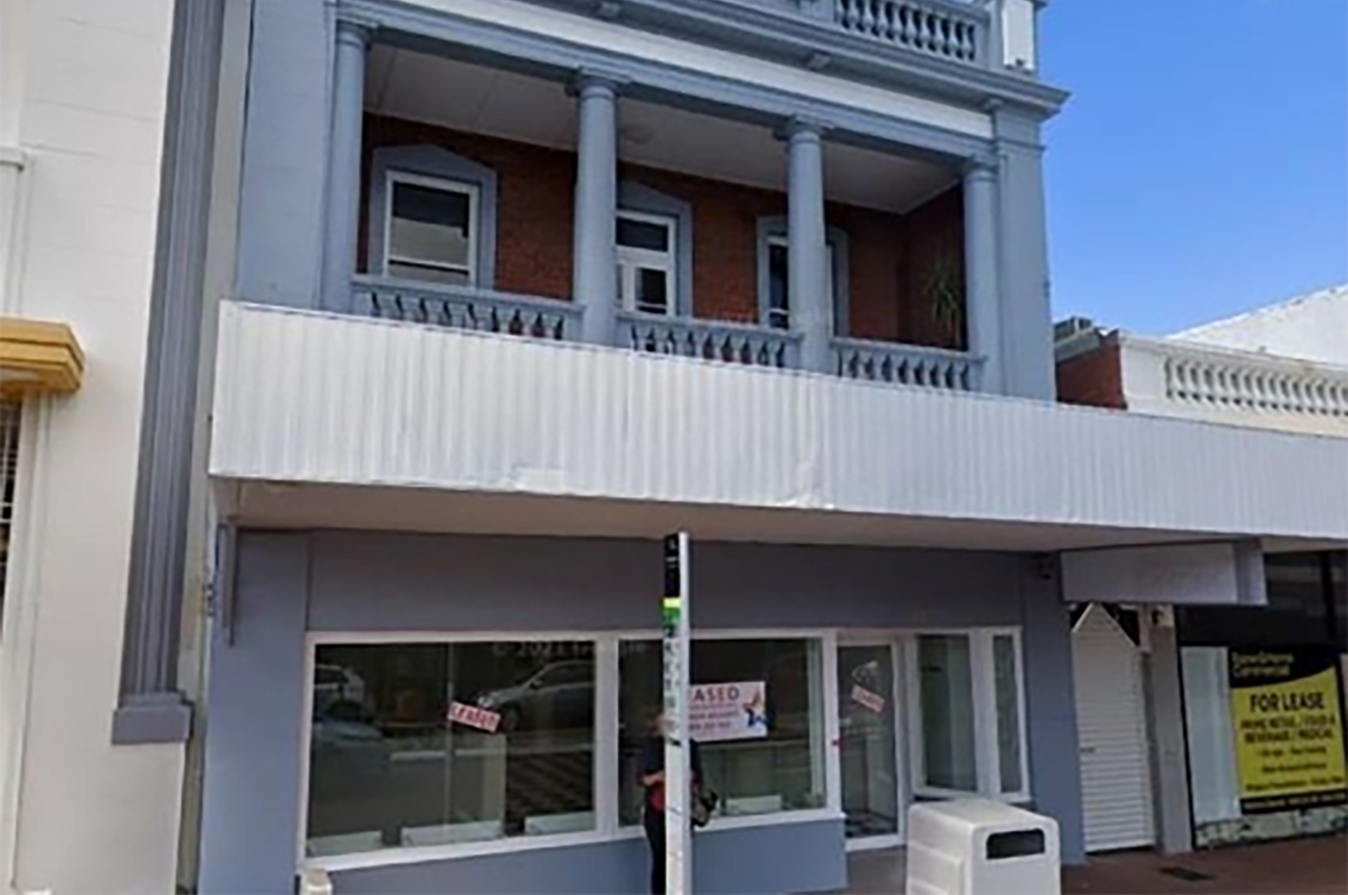
The two-storey building at 668 Beaufort Street, known as Mount Lawley News, was built around 1910 in the Federation Free Classical style. The site was developed as part of the original subdivision of Mount Lawley Estates One and Two. It sits within the current Mount Lawley Heritage Protection Area. The ground floor, which has been adapted as a shopfront has a cantilevered canopy which extends over the footpath. The ground floor door opens up onto the footpath as it was built up to the street boundary. The building also included living quarters. The first floor has a balcony front, supported on Tuscan columns with a decorative balustrade. Timber-framed sash windows are set into the wall either side of central timber-framed French doors.
In the 1940s, the shop was operated by fruiterer and greengrocer, Salvatore Musca, and the building was later purchased by stationer and newsagent, David Ernest Watt. A legal dispute between Mr Musca and Watt followed, as Musca was unwilling to vacate the premises after it was purchased by Mr Watt. In the early 1900s, commercial premises including this shop, were built around the intersections of Beaufort and Walcott streets to service the new suburbs that had been established following the gold rush of the 1890s. The development of the area has been attributed to improved public transport options, including the extension of the tramway in 1906 and the establishment of a railway station nearby in 1907.
659 Beaufort Street, Mount Lawley
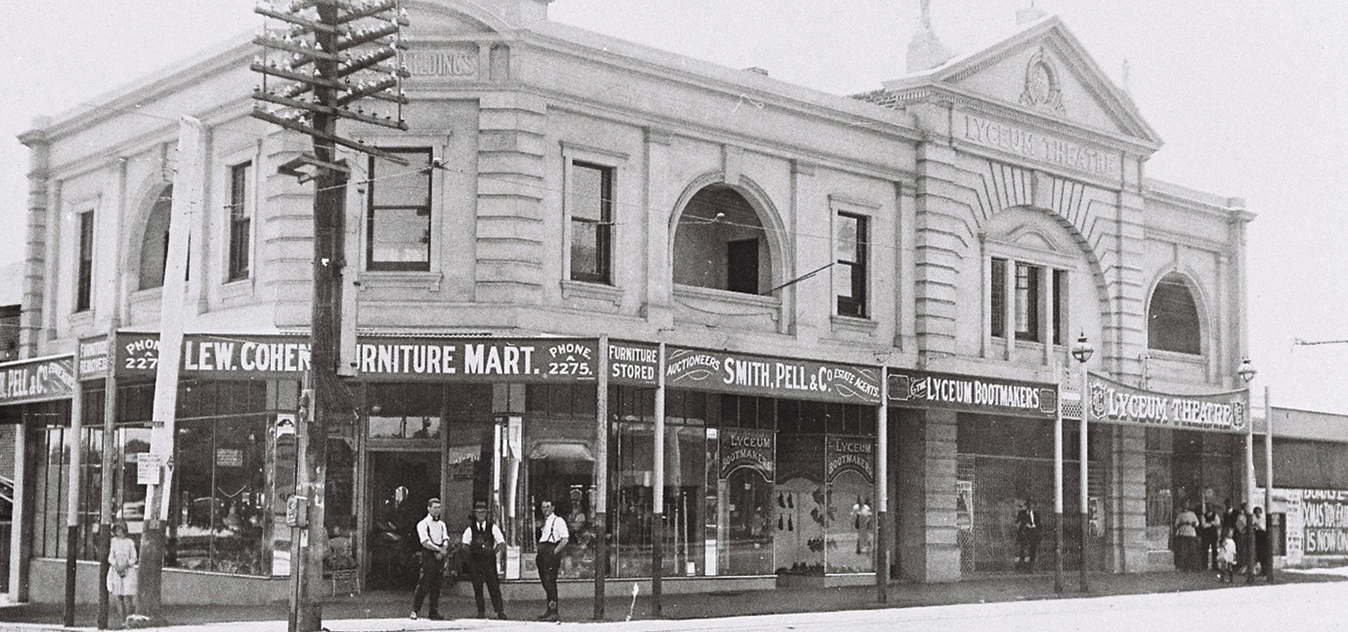
The Lyceum Theatre, now known as the Astor Theatre, is located on the corner of Beaufort and Walcott Streets. It was designed in the Federation Free Classical Style by David McClure and built in 1914-15 by Simon Bremner Alexander. Originally designed for vaudeville and lantern slide shows, it opened on 5 November 1919 with a seating capacity for 1,060 people: 300 in the dress circle and 760 below.
Initially hired for dancing on Tuesday and Thursday nights, by 1922, it was advertising motion pictures and popular orchestra. By the mid-1920s, it had converted to a cinema and had a new name, the State Theatre.
The adjacent outdoor cinema, the Lyceum Picture Gardens, was built in the 1920s at 665 Beaufort Street. In 1930, they were renamed the State Theatre and the State Summer Gardens, respectively, but were remodelled in 1939 in the Inter-War Art Deco style by architect William T Leighton and reopened, sharing films with the Civic in Inglewood.
Renamed the Astor Theatre in 1941 due to an Act of Parliament, it underwent further renovations in 1989 by Philip McAllister. The Picture Gardens closed in the 1970s.
The Astor experienced further renovations in the 1980s by Philip McAllister.
Entertainment History
The Astor Theatre, originally the Lyceum, has been a cornerstone of entertainment in Perth since its inception. It has seen numerous transformations, from motion pictures and orchestras to silent films, 'talkies', and a diverse array of entertainment including cinema, musical theatre, concerts, dances, comedy, and live performances.
Ron Regan took on a five-year lease and restored its Art Deco features. In the 1990s, the theatre saw further additions and refurbishments by Howard and Miriam Altman, and the Zimmerman family took over operations, campaigning for its State Heritage listing in 1999. Facing film selection restrictions, the Zimmermans shifted focus to live entertainment by the early 2000s. The last movie screened was the Rocky Horror Picture Show in 2008, marking the end of cinema at the Astor.
Established plaques
Corner of Beaufort and Walcott Streets, Mount Lawley
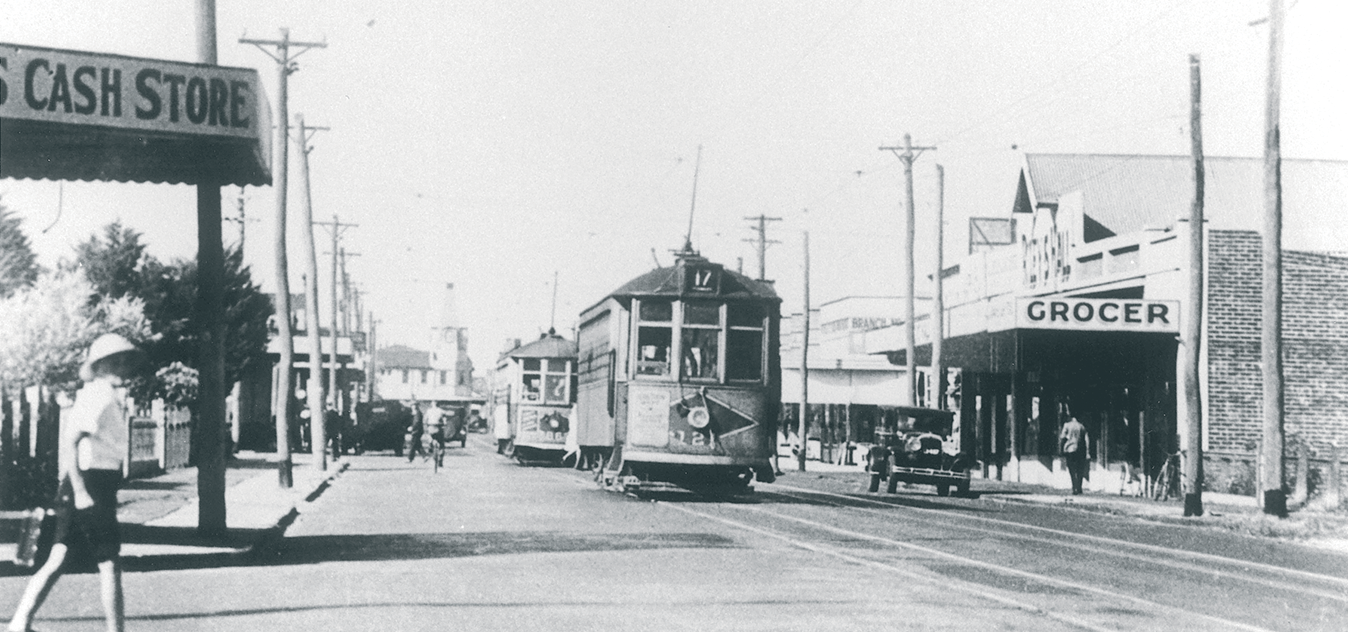
The last tram to run in Perth was in 1958 down Beaufort Street. Beaucott Junction was the first terminus for the Beaufort Street tramline. The tram service was important for the early growth of Mount Lawley, contributing to the chracter of the housing that is evident today.
654 Beaufort Street, Mount Lawley
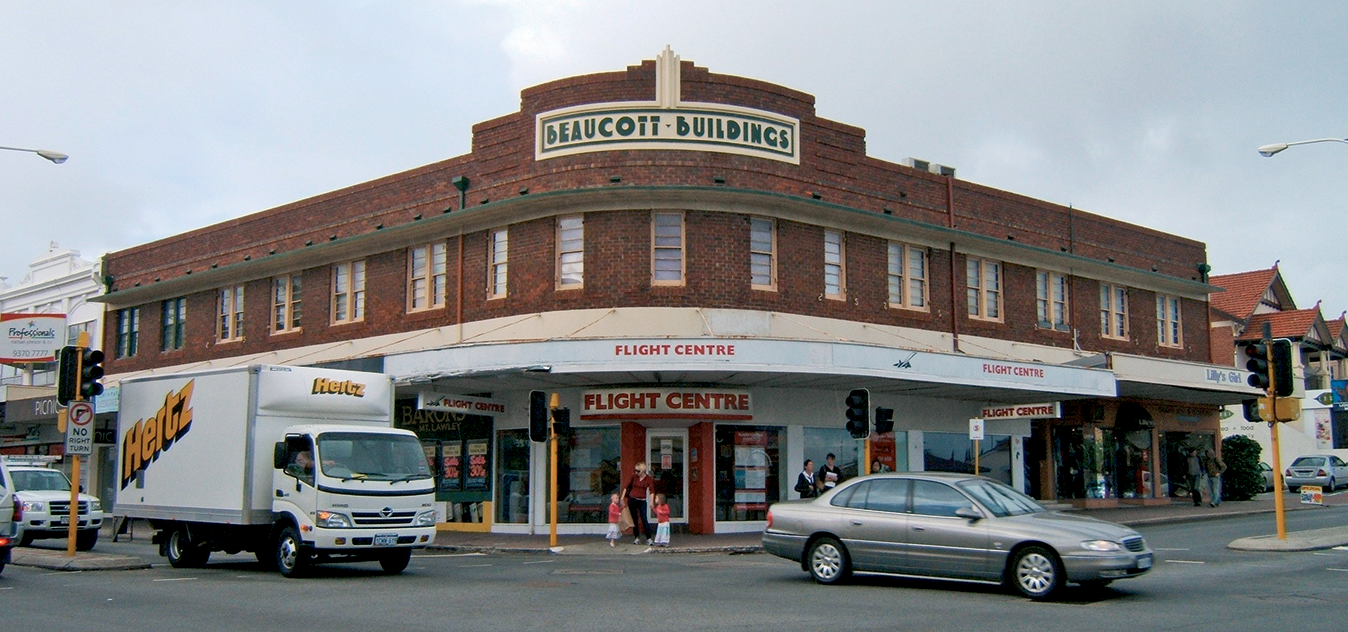
Originally built as a simple complex of shops and residences, the Beaucott Buildings were extensively remodelled and refurbished in the Art Deco style in the 1930s. It's named for its location at the intersection of Beaufort and Walcott Streets.
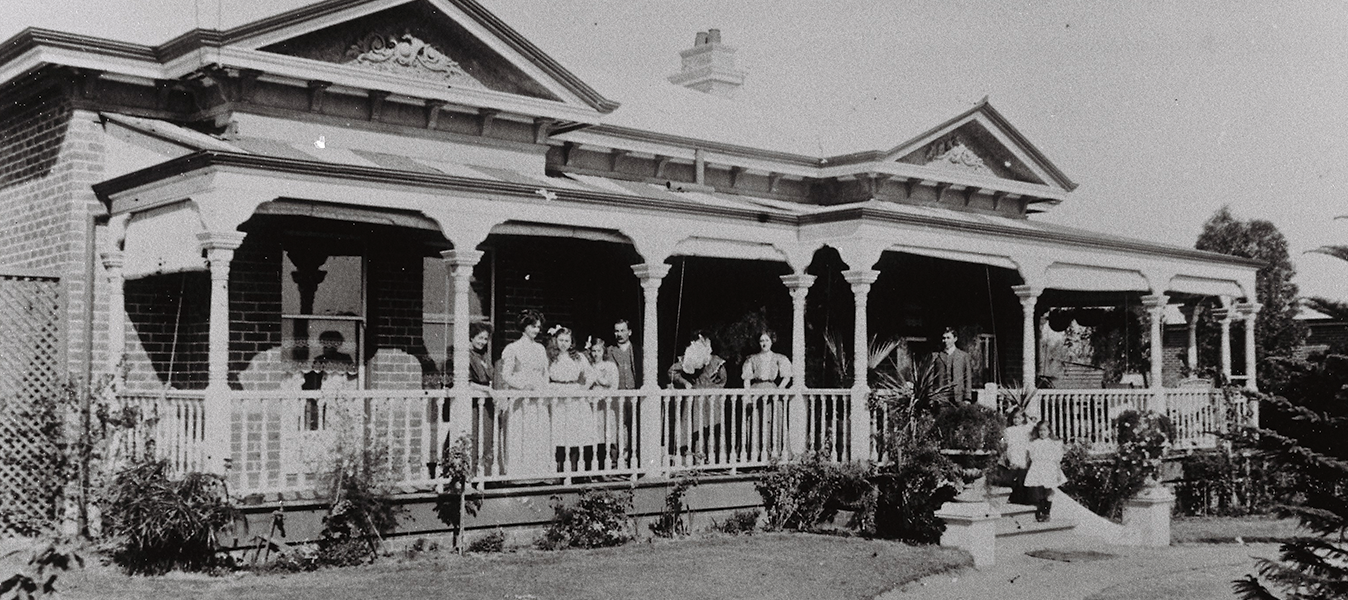
682 Beaufort Street, Mount Lawley
This plaque marks the site of the former Rosetta Lodge, built in 1903. Rosetta Lodge had various uses, including as a maternity hospital, guest house, WWII military establishment, reception centre and nursing home.
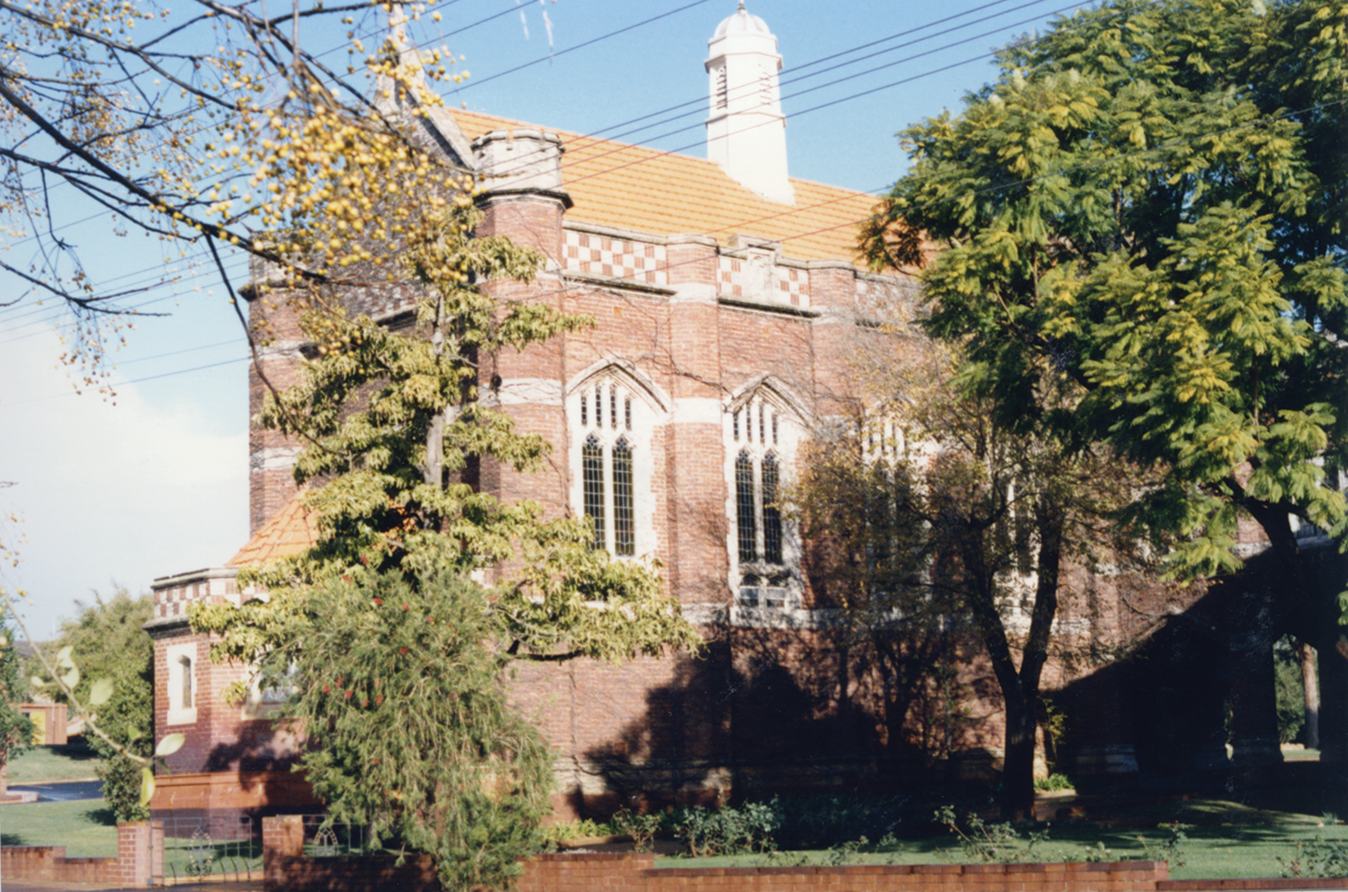
29 Lawley Crescent, Mount Lawley
The gothic-styled Chapel of St Michael and All Angels was constructed in 1926 by W.H. Bell to a design by Eales and Cohen Architects and was restored during the 1990s thanks to the efforts of the Old Girls' Association. The chapel is still in use by the Perth College Community and is an integral component of the Mount Lawley Heritage Protection Area.

Joint venture with Mount Lawley Society
The Mount Lawley Society was established in 1977, with a focus on promoting heritage protection, researching local history and educating the community. The City of Stirling is proud to partner with the Mount Lawley Society on the Heritage Walk project.
 Related events

